TetraMesa

  • About Us
  • Services
  • Clients
  • Contact
  • Blog

AI Build Copilot, Part 3: Building a Durable Workflow

July 14, 2026 By Scott

In Part 2, we went over Staying in Control of your build session. Now it’s time to start looking at consistency and reliability issues. AI conversations are useful working spaces. However, they’re not reliable long-term project memory. Sessions end. Context fills up and you have to switch chats. Maybe you switch models from Fable 5 to GreekTragedy-7.6 or ElonsNextWife-10.4. Files are edited elsewhere, etc.

An agent’s understanding of the project can become stale while sounding completely confident. That’s why the project must survive the chat and there’s ways to do that.

[Read more…]

Filed Under: Product Management

AI Build Copilot, Part 2: Staying in Control

July 14, 2026 By Scott

We started in Part 1 with what the bright shiny What AI (Site builder) Demonstrations Leave out… and it was fairly high level. Now we’re going to dive a bit deeper and yes, somewhat into some technical things. My goal remains: to help level up those in generally more non-technical roles, especially product management. (Though of course, what that technical continuum looks like varies widely.) Let’s start with some basics, and drill down from there…

The dangerous thing about AI coding assistants is that they are often very good.

Huh? How could that be dangerous? It’s dangerous because if they were obviously terrible in spots, we would remain more alert as we used them. Instead, they’re helpful enough to earn trust and inconsistent enough for us to experience times where we clearly shouldn’t have trusted them.

The interaction feels conversational. The agent explains what it is doing, uses reassuring language, and often anticipates the next task. Over time, it becomes easy to stop evaluating each recommendation independently.

That’s the lull.

The assistant is called a copilot for a reason. Do not become its passive passenger.

Disclosure: I did use AI in this series for spelling, grammar and to fill out a few bullet lists with minor items I missed. Generally, I draft, do outlines, and write everything; then have AI check spelling, grammar, and completeness; maybe clean up a few items. Here I did miss some bullets though and those are filled in. Where that was true, I checked sources on ‘truthiness’ for everything. The point is, every high-level thing I go into here are things I’ve personally run into – recently – while working on real projects. So it may seem like a lot, but none of it’s fluff. And you ignore them at some degree of risk.

[Read more…]

Filed Under: Product Management, UI / UX

AI Build Copilot, Part 1: What Demos Leave Out

July 14, 2026 By Scott

I’d recently put up an article about a joke site I build for fun while helping create some overall scaffolding for a more serious project. At the outset, I’d pointed out part of my motivation for writing about some of these things is to try to offer some tips and mention some of the traps that go with the reality of using these tools as product people. The bubbly happy path posts and videos seem to mostly gloss over some of the real speed bumps and risks along the way. I get that demos are often to help people just see what’s possible. But lately there’s such a hard sell to some of these things, and so full of clickbait as to often be somewhat disingenuous.

As “non developers” use these tools more, it’s obvious enough that AI coding tools can be astonishingly productive. They can also be confusing, unreliable, expensive, overconfident, and occasionally dangerous. As product people at all levels from Individual Contributor to Senior Managers, VPs, etc., start getting deeper into these things, (not as full developers, but just as useful parts of our new toolkits), we’ll need to get real about some basics. The Happy Path feel good posts on LinkedIn and demos on LinkedIn rarely go over the many real blockers.

So I’m going to do some of that here, in several parts.

[Read more…]

Filed Under: Product Management, UI / UX

I Built a Joke Site with AI – Then It Became a Production System

July 14, 2026 By Scott

This started as a joke that got out of control, but the build produced a few lessons worth sharing.

Most of my work is product-focused rather than production-focused. Product and marketing people should spend their time with customers, markets, competitors, business models, and worthwhile problems. Becoming absorbed in production can turn attention inward instead of outward.

Still, sometimes you need or just want to build something yourself. Like everyone else, I now use AI for all manner of things. But there’s a difference between a throwaway prototype for quick user testing and something that might approach production. For one project, I had to move beyond simple prototypes and build a modern AI-assisted production pipeline without experimenting on a client’s product, a company’s core offering, or anything containing important customer data. So I needed something harmless, but sort of real, to test with. To borrow from my woodworking hobby, I practice new techniques on cheap material before touching fine red oak. The same principle applies here: make early mistakes where failure costs essentially nothing.

So I built a joke website, but the tools and methods behind it are no joke. They are genuinely powerful. At the same time, the more serious project benefits from using this as a no risk practice platform. So here’s where we come out:

  • This article: I’ll just tell you what I built and some of the tools I used to do it.
  • Next Up: A series on AI Build Copiloting in general for “semi” technical users. That is, product folks with some basic engineering familiarity, who need to dive a bit deeper into these areas, even if only part of the time.
  • After that: Another series focused on building in databases with AI assistance.
[Read more…]

Filed Under: Marketing, Product Management, Tech / Business / General, UI / UX

Part 2: Stablecoins Aren’t All Stable the Same Way

June 10, 2026 By Scott

In Part 1, we discussed the many dollar-like claims of stablecoins. That matters because once we stop treating “stablecoin” as one single thing, the more important questions come into focus. What kind of claim is it? Who issued it? What backs it? Can it be redeemed? Does it pay yield? Who gets the float, and more.

So Part 1 was about the mental model: stablecoins as dollar-like claims. Now it’s time to go over why those claims are not all stable in the same way.

[Read more…]

Filed Under: Crypto, Uncategorized

Part 1: Stablecoin Flavors – What Are You Holding?

June 10, 2026 By Scott

Stablecoins are moving what we call Crypto more towards just “this is just Digital Money now.”

This two-part article series examines the current landscape of various “stablecoins” to clarify labels that often sound functionally descriptive but frequently aren’t. It also highlights under-discussed aspects in this evolving space. We need clearer understanding of what these assets are and as importantly, what they’re not. Even with the GENIUS Act and ongoing work on the CLARITY Act, significant ambiguity remains for some token types.

Stablecoins are not one thing. They’re a family of tokens with dollar-like claims, and the important questions aren’t whether they appear stable, but what kind of claim they represent, what backs them, who gets the yield, how they redeem, and what happens under stress.

Along the way, I’ll go into some of the oddities and implications of stablecoins. Some may seem slightly off topic. However, they’re all part of what’s becoming this ecosystem and therefore I believe useful in understanding how things fit together.

[Read more…]

Filed Under: Crypto, Tech / Business / General

Of Oracles & RWA Headwinds

June 3, 2026 By Scott

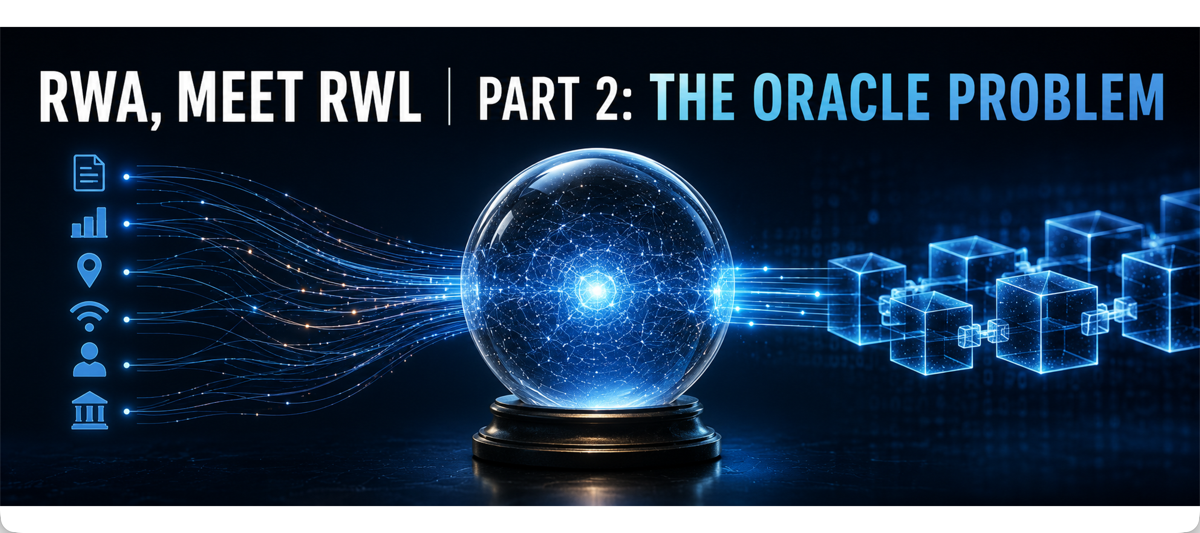
Tokenization of Real World Assets (RWA) is on a tear, but will some aspects be held back from mass market adoption for lack of trusted information about certain types of assets? Today’s Oracles, (that supply external, off-chain information to a blockchain or smart contracts), don’t seem ready for richer types of information that we’ll need. Today’s oracle infrastructure is better suited to selected structured data points than to richer, messy reporting packages such as engineering reports, appraisals, legal exceptions, maintenance issues, lease details, or materiality judgments.

Mckinsey estimates tokenization markets worth somewhere from $2T – $4T by 2030. They aptly point out, “Tokenization’s rate and timing of adoption will vary across asset classes” and “Given their characteristics, certain asset classes will likely be faster to reach meaningful adoption.” In other words, easier things will happen faster. Obvious enough. Others assessing future tokenization markets show more of the usual charts with curves bending quickly upwards. The more challenging areas though, will be where they’ve always been challenging in terms of regulatory issues, information flows and so on. When we get into “REAL” real world assets is where things are harder. That is, things like gold, mutual funds, or others that are already virtualized really, should translate more easily to representative onchain tokens than messier deals such as a local shopping center development, a piece of art, or similar. Let’s say a token says you own part of a building. But what if that asset has a problem? Who reports it? Where does the report live? Who’s liable if nobody updates investors?

Traditional finance has longstanding reporting structures. And they still get things wrong sometimes or suffer from fraudulent claims. When we build an abstraction layer like a blockchain on top, we need ways to bridge a reporting gap. Successful adoption here isn’t going to be about just splitting things into smaller pieces with tokens. It’s time to look at why and suggest some solutions.

The idea for this post came out of a LinkedIn thread where Igor Samotesov talked about why trillions aren’t flowing quickly into onchain RWA instruments. And I just happen to be re-reading a book on taxonomies. So this is the result. Here are some more potential reasons for what’s going on and possible solutions.

[Read more…]

Filed Under: Crypto, Product Management, Tech / Business / General

Using Skills for AI Builds: Product Safety

May 28, 2026 By Scott

Note: This isn’t about general skill in building things with AI… it’s specifically about things called Skill files or their similar counterparts.

Are you a product person at any level who is either building yourself or managing others that are increasingly doing some direct building?

Like a lot of us, I’ve been making some of my own stuff with AI tools. Or in some cases experimenting to understand their use cases better. Among the hype cycle things of this year are Skill files. (Or more generally skill type instructions for AI tools.) There’s whole marketplaces for them. This post is just a warning I’m throwing out there as a caution along with some ideas for mitigating risk. It’s not meant to be overly alarmist, but the “You can use skills to do anything!” hype is so overwhelmingly thick sometimes, it just needs some balance. And actually, I think it’s not just clickbait, it sometimes feels irresponsible and dangerous.

[Read more…]

Filed Under: Product Management, Tech / Business / General, UI / UX

Is Everything Going to Be a Derivative?

May 26, 2026 By Scott

This is about understanding risks in tokenized finance. The fact that is, the Wrapper is not the Thing. As U.S. regulators, courts, and market participants continue working through the legal treatment of tokenized assets, it’s perhaps worth stepping back from the hype and asking a simpler question. What are these instruments actually giving us and what is their actual nature?

[Read more…]

Filed Under: Crypto

Estate Planning & Digital Assets

May 22, 2026 By Scott

Safeguarding Your Digital Wealth

Cryptocurrency represents a rapidly growing class of digital assets. And actually, as Decentralized Finance (DeFi) gets more mainstream, I’m not even sure the original term “crypto” will even apply for much longer. Either way, more folks have Bitcoin, Ethereum, stablecoins, NFTs, and self-custodied wallets. Any might hold substantial value but behave very differently from traditional property in estate planning. Unlike bank accounts or stocks with named beneficiaries and institutional custodians, crypto relies entirely on private keys, seed phrases, and blockchain addresses. If using a more mainstream centralized exchange as a custodied solution, things might possibly work similarly to a typical brokerage firm. For everything else though? Without proper planning, these assets can become permanently inaccessible upon the owner’s death or incapacity, turning theoretical inheritance into real-world loss. While there’s all kinds of pros and cons we could talk about regarding truly self-sovereign control of your assets, one of the obvious ones goes beyond “Be more careful with your pass code info.” It’s that you can make it so secure, even you or your family can never get to it again.

[Read more…]

Filed Under: Crypto, Tech / Business / General

  • « Previous Page
  • 1
  • 2
  • 3
  • 4
  • …
  • 17
  • Next Page »

Recent Posts

  • The Tokenization Taxonomy: A Practical Map of Assets, Rights, Services, and Credentials
  • RWA, Meet RWL, Part 6: The Token Is Not the Thing
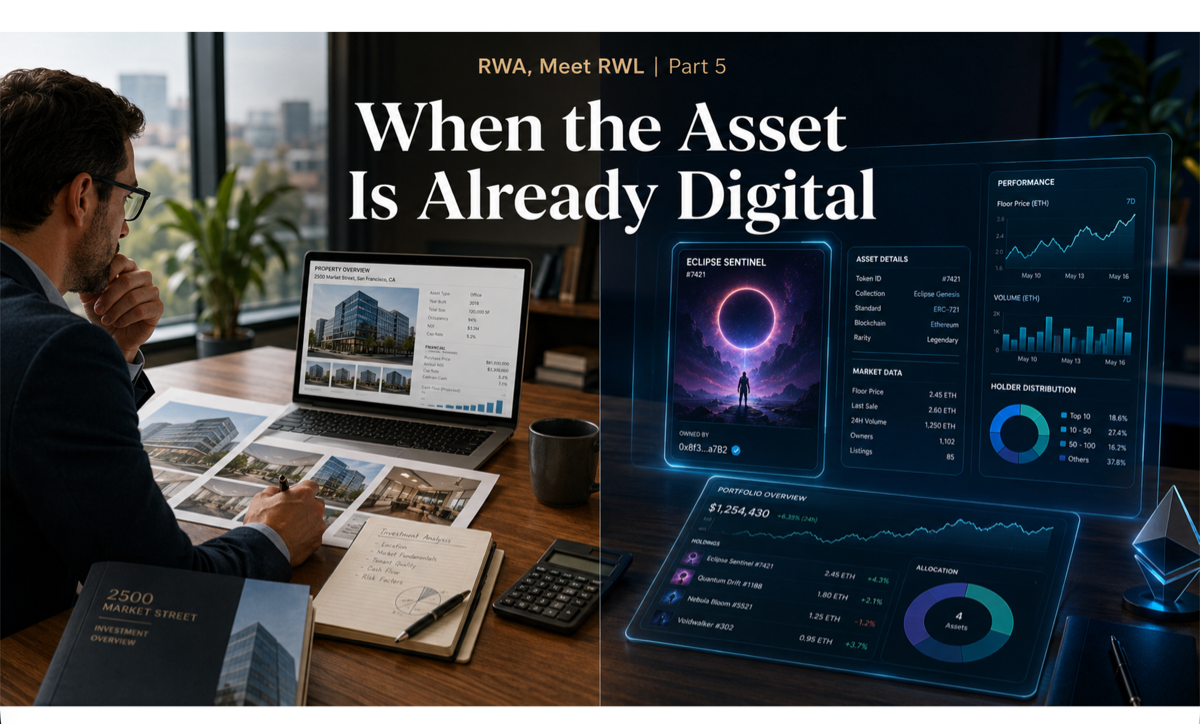
  • RWA, Meet RWL, Part 5: When the Asset Is Already Digital
  • RWA, Meet RWL, Part 4: No Blockchain Solution Fixes Real-World Lies
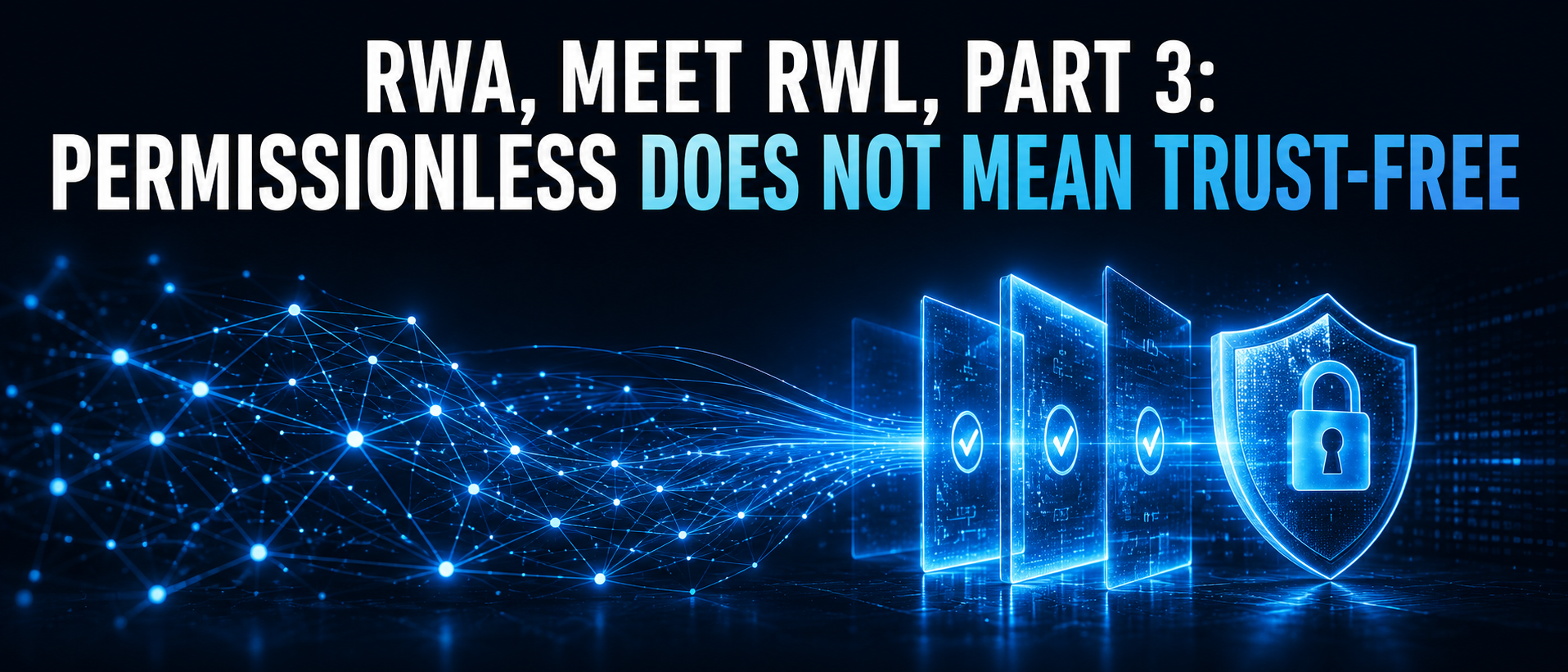
  • RWA, Meet RWL, Part 3: Permissionless Does Not Mean Trust-Free

Categories

  • Analytics
  • Book Review
  • Crypto
  • Marketing
  • Product Management
  • Tech / Business / General
  • Travel
  • UI / UX
  • Uncategorized

Location

We're located in Stamford, CT, "The City that Works." Most of our in person engagement Clients are located in the metro NYC area in either New York City, Westchester or Fairfield Counties, as well as Los Angeles and San Francisco. We do off site work for a variety of Clients as well.

Have a Project?

If you have a project you would like to discuss, just get in touch via our Contact Form.

Connect

As a small consultancy, we spend more time with our Clients' social media than our own. If you would like to keep up with us the rare times we have something important enough to say via social media, feel free to follow our accounts.
  • Facebook
  • LinkedIn
  • Twitter

Copyright © 2026 · TetraMesa, LLC · All Rights Reserved