Most AI Ethics talk is about how we should manage our new tools in terms of their output and actions with regard to us. Not the other way around. I wanted to explore the other side. There’s been some thought and work in adjacent areas, and I’ll cover that. What I’m interested in considering is this… What does routine casual, dismissive behavior or even contempt toward human-like AI do to harm to our human character, habits, empathy, and social norms? Are there things we should be doing in our designs of these tools to nudge towards outcomes that don’t end up degrading our own humanity? This is about concerns regarding the potential for human self-corruption, not machine victimhood. Most AI ethics asks how AI should treat us. I want to ask what our treatment of AI may be doing to us from an ethics and morals perspective, not just general cognitive issues.
[Read more…]AI Tooling Is Not Magic, and Product Managers Own the Fallout

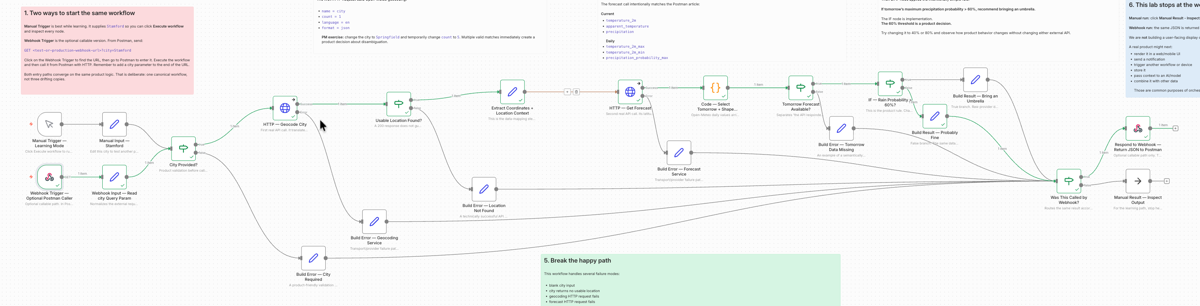
This extensive write-up is not a warm, fuzzy post about some AI strategic theater, though there are both strategic and tactical issues below. It’s a walk down some paths regarding practical issues. It’s about some of the challenging practical realities once product people try learning about or making tools work in actual workflows. You may feel some of my personal scar tissue in some of these passages. This is for semi-technical product people working with or learning several AI tools and dealing with some of the practical gotcha’s in making them go. It’s also raising a hand and calling BS on the spew of feed drivel about how “all you have to do is just set all this stuff up and crap magically happens.”
What’s Ahead? failures, data, workflow ops, context and prompting, evals, governance and kill switches, costs, complacency, and more, mostly related to smaller or mid-sized projects; though some ideas apply to all. This is a rather long post, even for me. But when I study things, I tend to go deep. As is often the case, this post is really based on my notes to myself in my person wiki over time, cleaned up somewhat and posted here to share.
These tools are great and I really enjoy them, even if there are some challenging spots, which we’re about to explore. Some of this stuff feels magical! And fun if you have that attitude. It really can be just fun and satisfying to see a workflow executing well if you’re working hands on. However, issues can quickly become a major hassle. It’s rarely as it is in so much of the feed fawning I see. On the surface, it looks like product managers, all of us really, are being sold a fantasy of frictionless AI tooling. It makes me wonder if some of these folks are actually using these tools for real. My own experience, and interacting with others or via Reddit and so forth, shows a usually more challenging and meandering path. That’s ok. I get it. The Happy Path is easier to write about and slap together a LInkedIn post or YouTube or whatever. Unfortunately, it also obscures some likely realities.
Here’s my message as we drive through the messy parts. You’re ok. It’s not you. These things can still be a little sloppy. Just keep pushing through.
[Read more…]Bad Customer Service? Or Market Opportunity
One Family, One Month, Multiple Customer Service Failures. Many Insights.
Over one month, our family logged bad customer service experiences. Not quite a formal study, but we did it because the same kinds of friction kept showing up. We’re both marketers, one in digital product, the other a corporate brand manager. So we analyze things. For example, when we go to a store, it’s not just shopping, it’s consumer ethnography. Like anyone facing typical consumer issues, we usually just power through minor annoyances and move on. But then thought “For one month, let’s pay closer attention and see what happens?”
[Read more…]BEO – Bot Engine Optimization
Most people discussing agent optimization are talking about basic visibility or commerce mechanics. I’d like to go deeper: data structures, trust, identity, interoperability, and security. I’m not sorry about trying to coin the term BEO. Except, as it turns out after a search, I’m maybe a month or so from not being first with this, (so close!). Though I’d like to extend the concept anyway, based on my own experience building and what I’ve been seeing.
We shouldn’t use AEO, for “agent”, because that’s taken. We need something new because as we all know if there’s no acronym, it really can’t be a technology. And wouldn’t it be nice to have unambiguous names? I mean, “DaaS” can apparently be “Data as a Service” or “Desktop as a Service” and we have plenty of other ambiguous mess. We should try to do better with our naming. Why Bot Engines now? We’ve trudged through the cave-dwelling ancient history of Search Engine Optimization (SEO), evolved into Answer Engine Optimization (AEO), and now we’re managing Generative Engine Optimization (GEO). So, naturally, we need something fresh. I’d like to try out BEO for the win as an idea. It’s the art and science of tuning bots, agents, and autonomous systems to thrive in interconnected digital ecosystems; optimizing them not just for performance, but for discoverability, interoperability, and trustworthiness in a world where machines negotiate, transact, and collaborate on our behalf.
It’s SEO, (though much more), for the agentic era. Just as websites compete for search visibility, bots will need to stand out in marketplaces, integrate with protocols, and build reputations.
[Read more…]Claude Skills for Baseline Competitive Analysis

The following goes over a fast way to get a jumpstart on a basic competitive analysis using Claude.ai along with the increasingly popular Skill function, complete with a slide deck and an Excel workbook. Spoiler Alert: Just skip down to “How to Install…” if you want to skip the explanations.
The catch: AI can accelerate the first draft, but it can’t replace judgment. Treat the output as a structured hypotheses, not truth. You’ll still need to validate claims, metrics, and positioning with primary sources and customer reality.
- Understanding Your Own Work: When doing strategic analysis, I believe part of understanding is in doing some of the discovery yourself. As great as AI is, it’s increasingly clear we sometimes lose at least a little something when we just have all the work done for us. That being said, the tools can help us get a big jump on things as a starting place.
- About Claude Skills: Claude.ai from Anthropic is one of many AI tools we have for generative language tasks. All these tools are bulking up with everything from training models, to agent tools collecting data, project organization and more. “Skills” are structured instruction files that shape how an AI behaves. It’s like an operating runbook for an assistant. They’re especially helpful for repetitive tasks.
Are Boomer & GenX Workers About to be More Valuable?

This isn’t about a contest about what cohort is more or less valuable. It’s an exploration into different types of skillsets and some of what’s been going on lately with AI.
Let’s run a thought experiment about workers in general and ageism in particular. With all the talk of AI displacement, I keep wondering if there’s a less dystopian view. A lot of roles may change or vanish, but we could also see growth in niche areas. And maybe the loud claim that “we won’t need so many people” turns out to be overstated. If so, do deep skills and hard-earned judgment become more valuable, not less?
All of a sudden, some who shed too much staff, (and as is often the case, the wrong people), need to hire at least some back. Meanwhile, the nature of expertise changes such that “older” workers, wherever you want to draw that line, turn out to have a lot more value because a) the smarter machines are amazing, but turn out to still have limits, and b) AI may hollow out some early-career task bundles, and that can raise the relative value of people who can frame problems, validate outputs, and take responsibility for outcomes. I’m a huge fan of the latest AI tools and a frequent user of multiple models, several bots and agentic workflows. I’m fully buzzword compliant! And yet, in spite of the dire warnings of the viral Shumer post “Something Big Is Happening“, there may be a still be a place for talented and experienced humans. See Joe Procopio’s “It Turns Out, AI Agents Suck At Replacing White-Collar Workers” for one of many examples.
Some companies who claim they’ve cut staff thanks to AI may discover they cut too deep, losing exactly the people they really need. Meanwhile, expertise may be repriced. AI is impressive, but has limits, and it can hollow out early-career task bundles. That raises the value of people who can frame problems, validate outputs, and own outcomes. I’m a heavy user of modern AI tools and workflows, yet even with the “Something Big Is Happening” hype, there still seems to be plenty of room for talented, experienced humans See Joe Procopio’s “It Turns Out, AI Agents Suck At Replacing White-Collar Workers” for one of many examples.
Maybe this sounds naïve, but perhaps multiple cohorts will remain valuable, just in different ways. Through it’s looking to be a rocky transition. Yes, Skynet could wake up next week, but there’s also a world where things mostly work out fine. I know I’m supposed to say “if you’re not using AI in the shower, you’re doing it wrong.” I’ll work on the clickbait. For now, let’s talk about what’s actually changing.
Kids These Days
They’re often far more fluent with modern tools than we were, and they’ve grown up swimming in information; more volume, more variety, better teaching methods. But by definition, most early-career workers have limited lived experience. They may have had a few jobs in high school and college, maybe even a small side hustle, but the rest has been school, hobbies, and a first job or two.
They may also have less intuition than older cohorts did at the same age, not because they’re incapable, but because so much is abstracted away. More services handle more of life, reducing cognitive load in ways that can erode “practice-based” skills (navigation via GPS is the cliché example). Sol Rashidi calls this “Intellectual Atrophy™.” Even if that term is AI-focused, the broader pattern predates LLMs. And yet, younger workers can be astonishingly capable especially in tech while still missing some “common sense” that usually comes from scar tissue plus environment.
[Read more…]Maintaining Healthy Cognition Living With AI

We all have a choice about how we use these new tools. And if you are a parent, how you teach your kids to use them. If you lead a team, the same questions apply. How should your business use them, and where do they add value for your people and customers?
This is an exploration of the “why” behind a lot of what is going on. I reference behavioral research along the way.
This will not be “Here’s how you build a chatbot to take over the world tomorrow.” Or “this will replace your workforce tomorrow.” It is also not a “Here’s what you should do checklist,” though there are practical ideas near the end. Think of it as a tour of how AI can shape how we live, work, and think, with background on how it works and perspectives you may want to consider for yourself, your teams, and family. The topics are not new, and not all original. The goal is to revisit common themes and add depth by getting closer to their primary drivers. Not just what to think, but why the assertions may be true.
Note: this is a long form article, not the usual LinkedIn bullet points. Some articles get built in bits and pieces over several years as I learn about a topic They’re really my research notes. I usually include a quick summary up top. Not this time. This one is for deep background and context. I think these issues matter for the next set of our collective societal decisions. If you want a “what can I do right now” checklist, this isn’t it.
[Read more…]Re-Thinking Build vs. Buy: AI’s Hidden Costs in Product P&L

Time to step away from the AI hype and look at real costs for everyday AI use cases. This article focuses on internal tooling and operational spend, not so much more exciting user facing products; though the same cost dynamics apply.
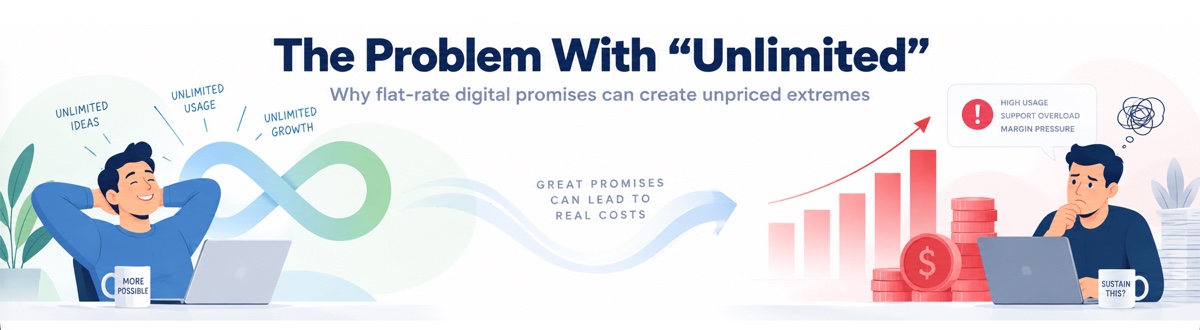
My motivation here is I keep hearing AI will let teams “vibe code” their way out of SaaS, but AI can also turn the resulting products’ predictable Operating Expenses (OpEx) into volatile, usage-based costs. So I want to think through ongoing variable costs. Not ROI or quality risk, which matter too. Or the reality that AI talent may still be hard to find; just really more ongoing variables costs, which are different than our more predictable past tools.
Spoiler Alert: I’ll run through the thought process and offer up a spreadsheet. But the bottom line is this choice can be very business specific. Building your own with AI can easily spin up costs faster than you’d expect, as can burning tokens with SaaS solutions that add AI. But even speedier app development with AI assisted coding might cost you more than SaaS. Scroll down and just grab the spreadsheet or read on for all the details. It’s about more than just tokens vs. seats.
Quick Summary: SaaS often seems pricey per year, while “vibe coding” your own replacement can look cheaper early but gets expensive once you count labor, operations, and risk. The biggest drivers are seats, interaction complexity, and hidden costs like evals, testing, and ongoing auditability. DIY can win for small, short efforts, but at enterprise scale SaaS can still be cheaper on TCO even if the subscription line stings. In either case, for AI enabled products, there’s inference/token and other costs. Here’s the sheet if you’re skipping the rest of this article. (Note that older non-AI enabled build vs. buy examples are there just for historical reference and comparison.)
Also note that the cost assumptions I’ve put in here to start are radically higher than what simple token pricing might be compared to what you’ll find on a vendor’s chart. I’ve tried to add blended costs for things that reflect real production costs, like API costs, vector database queries for RAG, caching and so on. The point is for you to plug in your own numbers. If you want you can split out more granular costs to their own lines.
And, oh yes… don’t forget token costs are not the whole story. This piece is focused on costs, but when you shift to pricing and ROI, it’s worth reading John Rowell’s Context Is the Next Frontier in AI Economics.
[Read more…]Bot Convergence for a 24/7 Economy
There’s a lot going on right now. But I’m sensing there’s a unifying theme. I think it’s something to do with driving towards a fully always on 24/7 economy. As crypto truly merges with traditional finance (TradFi), and AI continues in its overall capabilities plus agentic and bot autonomy, what do we get? Or rather, what are we driving towards; good, bad or otherwise?
I like to try to write about things related to digital product management or at least somewhat practical things. This isn’t that. This is more digital culture and culture in general. These are just some thought explorations I’ve had while playing across multiple technologies. It’s an attempt to look around a few corners based on an admittedly vague sense of where some of these things could be converging. And it’s going to feel like a somewhat random walk to try to get all the puzzle pieces in place. And there are several pieces. I promise I’ll eventually get to a point though.
If you have other things to do, now’s the time to bail out! Otherwise…
[Read more…]Why Crypto Cards Will Finally Disrupt Credit Cards (Soon)

Maybe I’m just being targeted with more card offers, but between my experience and research for a small payments project, I’m seeing more crypto companies roll out traditional-looking cards. It’s a smart strategy: crypto is still cryptic, so familiar packaging becomes a Trojan Horse into the market. People have been talking crypto-card growth spurts for years (see i2c in 2022), and some still call it a slow roll, especially after multiple “crypto winters.” However, it feels the pace is picking up, so I dug in and wrote up why.
What’s changed? This article is my take, part as crypto enthusiast, but mostly through a strategic product lens. The bigger picture is an industry that’s enjoyed near-unchallenged dominance for decades, and suddenly the landscape is getting complicated. Card networks remain entrenched, but the last few years added simultaneous pressure from regulation, real-time bank rails, and shifting consumer payment preferences, making the ecosystem materially more complex. It may look like the upstarts cooled off as the hype faded. I think that’s a dangerous assumption and a setup for surprise. Let’s look at what’s been happening and why I believe we’re closer to new inflection points than ever.
By the way, this isn’t a prediction that revolving credit disappears. Many find value in it regardless of how destructive it can be to personal wealth. This is more a prediction that the card bundle (payments + rewards + account relationship) shifts to wallets, leaving traditional issuers with less pricing power.
TL;DR Spoiler: You don’t have to do anything just yet. Though you may want to explore as a consumer to see if you can get better rewards. As a merchant, just keep an eye out for evolution here. Customers may abandon shopping carts or avoid you if you don’t offer their payment method.
That’s it. Stop right here!
However, I believe in deeper holistic and strategic marketplaces views. So if you want the long form in-depth reasoning, here you go…
[Read more…]- 1
- 2
- 3
- …
- 11
- Next Page »