If you follow crypto, you’ve likely noticed the rise in DeFi activity the past several months. As Traditional Finance (TradFi) evolves and co-opts parts of crypto, we’re seeing emergence of a hybrid model called Centralized Finance (CeFi) and watching what may be an inflection year. Every year seems like “the year of SOMEthing,” but with trillions finding new pathways, it seems a fair statement now. Growth of Decentralized Finance (DeFi) despite easier Central Exchange (CEX) options is telling. DeFi remains difficult and risky. Yet it’s growing as percentage of crypto activity. Some of this may be episodic, but it reveals a deeper signal about marketplace pain points: users will endure hardship just to escape worse systems. It’s a story of value over comfort, like drivers taking a pothole-filled detour to avoid a toll road they no longer trust, but there’s someplace they’ve just got to go.
[Read more…]The Composable Everything Future

Something is happening across technology sectors creating one of those paradigm-shift moments. It’s not a single breakthrough but a convergence of pieces that have struggled to be the “next thing” on their own. Their larger use cases are emerging as they interact. Look across our shiny new tools: blockchain, crypto, and of course AI and more agentic systems. Together they’re forming connective tissue among themselves. Like generalized microprocessors once enabled hardware to be more useful and economical with flexible software, this new phase of composability could again transform speed, flexibility, and cost.
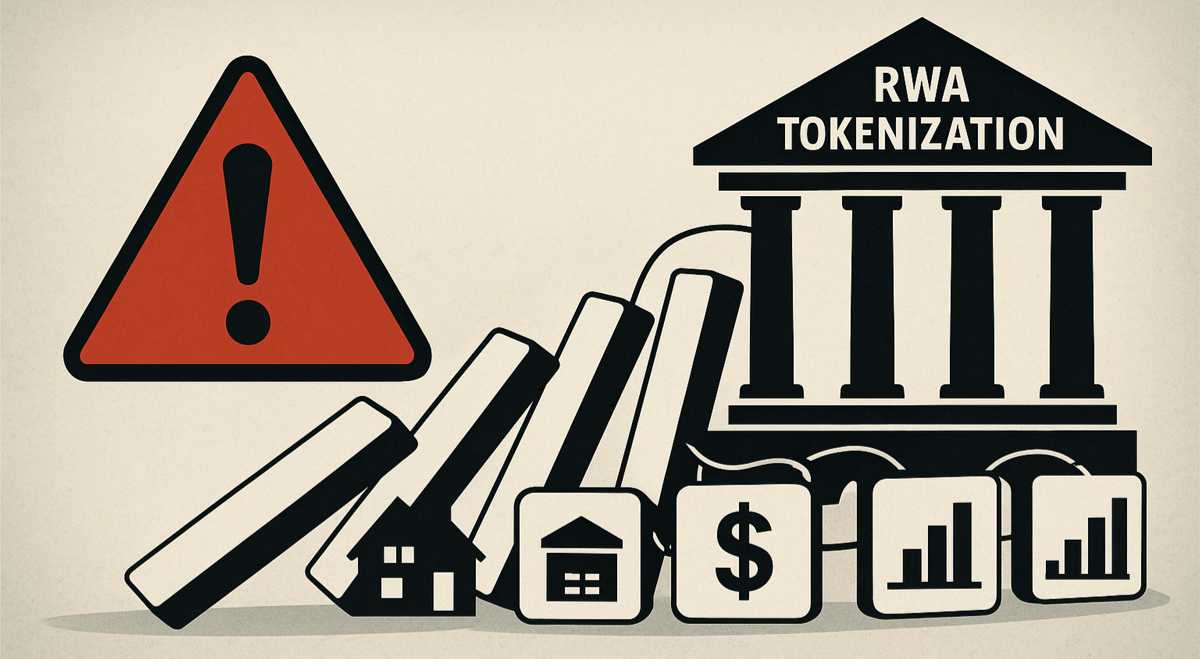
[Read more…]Will RWA Tokenization Growth Increase Systemic Risk?

As a product person and retail investor, I’m sensing what I would have thought is an obvious risk with Real World Assets (RWA) tokenization, but don’t see much discussion beyond esoteric finance venues. I’m a believer in blockchain and crypto opportunities. However, I prefer a more thoughtful approach than the breathless crypto maxi hype spew. With that perspective, I’d like to offer a primer for product managers and investors interested in this area. I’m trying for a deeper sense of what’s going on than, “The RWA Tokens Are Coming, Invest Before You Miss It!” Or as Darth Crypto would say, “The FOMO is Strong with This One.” Disclaimer: I’m not a finance person… these are my explorations into this world as a retail investor and digital product builder. I’d just like to help my friends and colleagues with informed choices.
[Read more…]How to Capture Sales / Margin by Just Being Less Bad

Maybe it was back-to-school season or random, but in my family we’ve recently switched multiple brands, vendors, and products for reasons from quality to service to pricing. Each move had friction: annoying phone calls, returns, learning new systems. How bad does something have to be to push customers past switching cost barriers to seek alternatives? Although I’m coming from a consumer perspective with this, it all applies to B2B as well.
I’ve shared my perspective on brand loyalty before. This is now about how average or bad is more frequent. For consumers, it’s frustrating. For product leaders, an opportunity. While quality is subjective, evidence shows decline (or at least perception of decline) recently in product and service quality. Forrester’s 2024 US Customer Experience Index reports quality among brands in the U.S. is at an all-time low, declining for a third consecutive year. Then we have The American Customer Satisfaction Index (ACSI) reporting U.S. overall customer satisfaction dropping for three consecutive quarters.
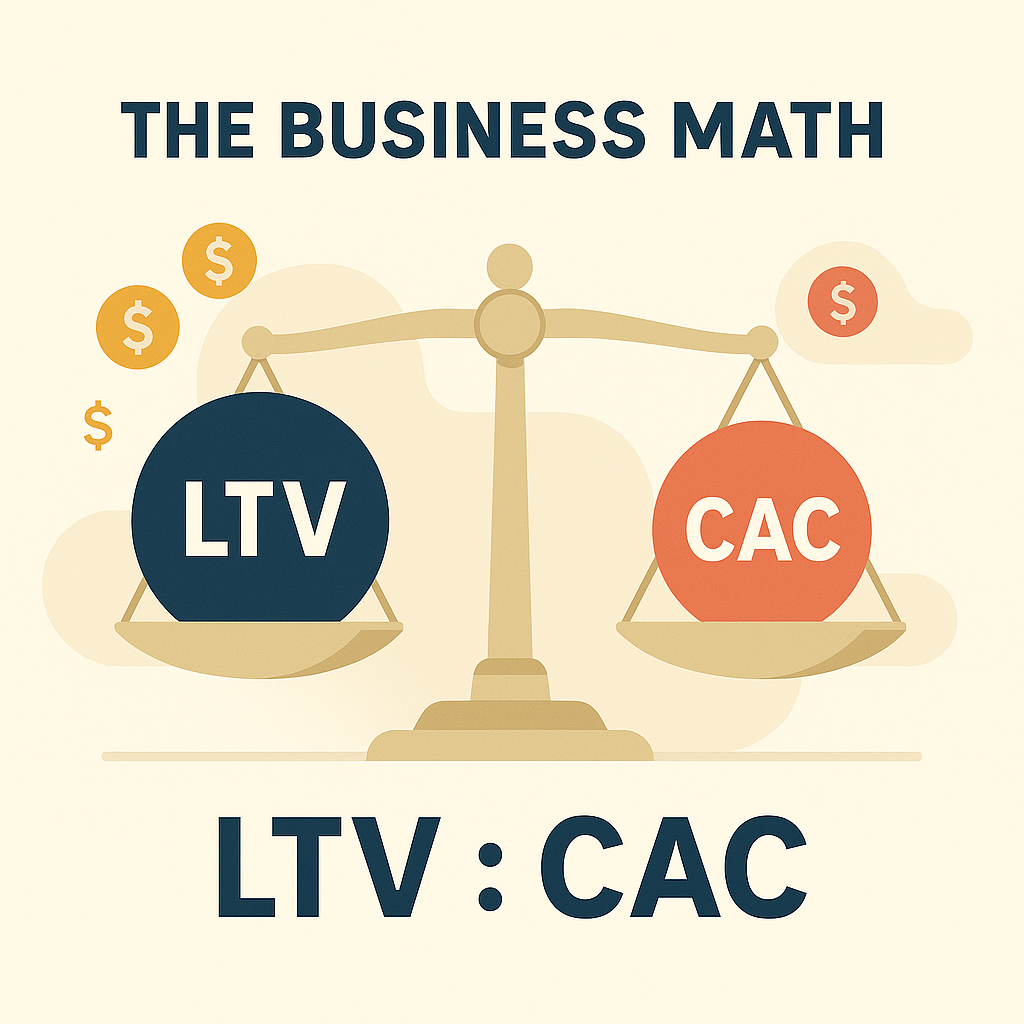
What’s behind this? Execs in the Know suggests cost cutting, bad customer service bots and lack of focus on customer satisfaction. One fundamental business ratio is Lifetime Value of Customer (LTV) and Customer Acquisition Costs (CAC). Leaving aside operating costs and understanding there are variations by industry… For the LTV:CAC ratio, at 1:1 you’re breaking even, 3:1 you’re likely healthy. Below 2:1 chances are you have thin margins and below 1:1 you’re losing money. LTV:CAC is a lagging indicator because churn and retention metrics might take awhile to show.
It’s one thing to have customers you erroneously think might be happy. It’s another to have some that can’t stand you and switching cost is the only thing barely keeping them with you.
[Read more…]Agentic & AI Business Safety for Product Managers – Part 2

Welcome back. If you’re new here, in Part 1, I went over some basic risk categories Product Managers need to be looking out when AI is an offering component.
This follow-up will cover the items in Part 2 of the outline. My motivation for writing these articles is due running into the challenges expressed in Part 1 head first and didn’t see a lot of great article coverage. For this next part, topics are already well-covered, but I’m going to run through them as introductions anyway for the sake of completing the outline and having a cohesive package for anyone new to the area.
As with so much we deal with, these areas are evolving fast. Many areas don’t have settled answers yet, and in the case of some fairness and ethical areas, might not even have the right questions yet.
[Read more…]Agentic & AI Business Safety for Product Managers – Part 1
TL;DR
Following are some things I’ve been coming across as I work, (and play), with some of our new tools. These days, whatever your level in Product, chances are you’re building or at least looking at something involving Agentic workflows or AI.
Given the increasing ease of use of new tools, you’re probably working directly with them. Hint: Even if you’re a CPO or VP, if you’re not getting your hands dirty, you’re similar to the CEOs as recently as the 1990s who were proud of the fact that they didn’t use email. Is that really the box where you’d like to constrain yourself? As with so many things, you don’t likely need to be an expert here. You just need to understand what the tools in your box can do and certainly some of the risks we face. Whether as Individual Contributor (IC), or senior manager, there’s risks and basic practices you need to have on your checklist that should be table stakes. Many of us now build with Low Code No Code or are VibeCoding our way to MVPs. Great. These tools are awesome for prototyping. For production though?
Watch out.
Stop here and just ponder that thought if you like. For details… read on. (Note that some of the upcoming examples are for any product person, whereas others are for more technical PMs or their developer partners. Regardless, they should give you a sense of what kinds of things you need to check off your list.)
[Read more…]
PM Perspective: Is AI a Great Business?

Introduction
Short Answer? Maybe not so much. (At least when talking about the core tech vs. specialized solutions.) This won’t be as much about AI as about category and startup creation in general. AI just happens to provide us with a great developing case to review. (At least in terms of Large Language Models (LLMs) and Generative Pre-trained Transformer (GPT) products.)
Product people need to zoom in and out. There’s so much noise around new AI features, we may forget to take a wider view. While we’re often responsible for detailed product roadmaps, some of us also do strategy and business planning. In that role, we need to think about offerings in terms of long term strategy. Rapid growth in AI LLMs / GPTs provides a case worth study in terms of new category creation. We should keep in mind that AI / ML has been around for decades. What’s interesting now is the LLM / GPT space is a great example of a Blue Ocean strategy that is perhaps only fulfilling its promise in a general way. That is, the rising tide is lifting many boats, but early pioneers might not be able to take margin advantaged positions, which should be a benefit in a new category. (If you buy the book, be sure to get the latest edition.) Even though OpenAI bust this category open, they didn’t get to a winner-take-all or even winner-take-most position.
Why?
[Read more…]When LLM Models Get all Forked Up
Things are going to get forking ridiculous. I think there’s already enough results in that I can make a prediction. And that’s this…
These new tools we have are going to get a lot better and also somewhat worse at the same time. Like a lot of you, I’m having great fun using some of these new tools. Sometimes as a consumer. Sometimes for digital product craft. And sometimes for personal experiments. Insofar as those of us working in Product should be paying attention to trends and adjusting our efforts, we should be watching this emerging area of a patchwork modelverse of LLM dark matter. (Apologies for mixing metaphors so early, but I’m just really an LLM myself with drastically limited training data.)
Why should we care from a Digital Product Management perspective? As we look at some of the To Do items below, it’s not necessarily a product person’s job to handle the specific task, but we should understand the risks and make sure at the very least that table stakes items are part of the work plan. Because we need to ensure what we build is not only performant to its fit-for-purpose build, but also be confident that go-to-market claims are trustworthy. And I think it’s possible a lot of our products may end up sitting on shelves next to dain bramaged garbage. Trust is still going to matter. Actually, more so than ever. But we’re going to have to prove quality and branding will still matter.
[Read more…]GPTs and LLMs from a User Use Case Perspective

Companies are missing the mark with AI projects. The headlines are not great.
- Gartner Predicts 30% of Generative AI Projects Will Be Abandoned After Proof of Concept By End of 2025
- Research by the RAND Corporation estimates more than 80% of AI projects fail, which is twice the rate of failure of non-AI projects.
- Deloitte shows some benefits accruing such as uncovering ideas and insights with ROI generally positive, and yet, barriers due to mistakes with real-world consequences.
- BCG’s 2025 survey indicates only “25% of executives are seeing significant value from AI”, with projects vulnerable due to unclear use cases and poor data readiness.
What’s going on? And more to the point; can product people help improve these outcomes?
Perhaps there are efforts to solve tech problems, but not always customer problems. From a Product person’s perspective, it’s time to re-visit basics and use cases. In the add AI scramble, there’s confusion about our shiny new toys. You see it in the drive to do anything with them. You see ridiculous job requirements posted from tech to product asking 5 – 10 years experience deploying AI. (For traditional ML, that may be fair. But they usually mean GPTs/LLMs, which have only been around a handful of years.)
Let’s reconsider our new capabilities from customer use case perspectives with focus on LLMs/GPTs. While also growing, we’ll skip traditional ML as it’s a separate and better understood category. (Things like regression models, decision trees, or clustering algorithms used in fields like finance, logistics, or medical diagnostics, which have established frameworks and decades of practical application.)
Why should we try a look from use case perspectives? Because for those of us that work in Product, instead of panicking figuring out how to check off the “We’re doing AI” into a checkbox in an Annual Report or a marketing piece, it might be useful to have clarity of purpose. We’ll focus on Generative Pre-trained Transformers (GPTs) and the Large Language Models (LLMs) over traditional ML or multi-modal GPTs.
[Read more…]Agents for Content Discovery and Ideation
TL;DR
If you’re a product manager crafting content production workflows for yourself, a client, or your team, start by explicitly defining your values and strategy. (After all, values like authenticity can be core to your strategic edge.) What follows are practical ideas and a walkthrough of how this plays out in a real-world example: a niche medical site powered by AI agents for discovery and ideation.
AI tools don’t need to be garbage generators. They can be useful partners when used thoughtfully with humans in the loop. Here’s just a couple of ways AIs can help in market discovery and content creation, backed by real-world examples from my niche medical community site, ACLSupport.com. Key takeaways: Leverage AI to uncover customer insights quickly and streamline production, while maintaining your unique voice. In a market where AI content tools are projected to reach $2.38 billion by 2032, and the Generative AI In Content Creation Market $134.23 billion, businesses that integrate these tools ethically will gain a competitive edge.
The AI Content Debate: Addressing Key Concerns
As AI reshapes content marketing, backlash centers on two main issues: quality and authenticity.
Quality: The “AI Generates Garbage” Debate
Critics argue AI output often feels generic, optimized for clicks rather than value. This may be true for low-effort prompts churning out clickbait, but it’s not inherent to the technology. Content creators, writers, marketers, understandably worry about disintermediation. Yet, as with any tool, results depend on the user. Poor input yields poor output, much like spellcheckers can’t fix flawed ideas.
Authenticity: The Authenticity Dilemma
The deeper unease stems from the “uncanny valley.” If you haven’t heard of this, it’s kind of a creepy feeling when something mimics humanity imperfectly. We dislike being deceived, especially where source transparency matters. Blockchain might have a partial solution by verifying origins as I’ve written about, but for now, we don’t have this industry infrastructure. According to the Content Marketing Institute’s 2025 B2B Content Marketing report, while 81% of B2B marketers use generative AI, 45% lack usage guidelines, underscoring gaps in prioritizing authenticity. As is often the case, our practices lag the cutting edge tech.
[Read more…]- « Previous Page
- 1
- 2
- 3
- 4
- 5
- 6
- …
- 13
- Next Page »