TetraMesa

  • About Us
  • Services
  • Clients
  • Contact
  • Blog

About Stablecoin Issuer Controls

February 19, 2026 By Scott

Note: this is about basic, issued fiat reserve backed stablecoins, not algorithmic or any other type of stablecoins.

Stablecoins may be the first truly mainstream useful thing to come out of crypto. Here are some things to be aware of though…

We should always know what we’re buying and what assets we’re holding. Stablecoins are useful and increasingly foundational to crypto payments and settlement. The name itself inspires confidence. Something to be aware of, though, is that the stablecoins are typically far more centralized than expected. Issuer and administrator controls can freeze, pause, and sometimes effectively claw back funds, even when holders think they are holding something “cash-like.” This is not necessarily a bad thing. Though those who see crypto’s dream of self-sovereign finance think so. Typical consumers and product people in finance businesses likely see the value in the controls. I promise am not here to trash stablecoins! They are one of the best uses for crypto to come along yet. I just believe people should understand what they own and how their tools work. And I think a lot of folks don’t know a lot of the following about stablecoins.

Consumer and business crypto users should understand there is a quiet structural reality that’s under-discussed outside of more technical or compliance-aware circles. The general crypto meme that often gets sold is crypto is “self-custody so no one can touch it” and it may feel that way if looking at a balance in your personal wallet. Assuming you use a self-custody wallet and keep your keys safe, this is true for bitcoin, not necessarily true for issuer-administered ERC-20s coins or tokens. The phrase “custody” often gets over-applied. For personal wallets, self-custody really means: you control the private key that can sign transactions. It does not automatically mean: the asset can’t be frozen, transfers can’t be blocked, redemption can’t be denied, or that the rules can’t change via upgrades/admin roles. With BTC, controlling the key is basically the whole story. With many stablecoins, controlling the key is only one layer.

[Read more…]

Filed Under: Crypto, Tech / Business / General

Are Boomer & GenX Workers About to be More Valuable?

February 19, 2026 By Scott

This isn’t about a contest about what cohort is more or less valuable. It’s an exploration into different types of skillsets and some of what’s been going on lately with AI.

Let’s run a thought experiment about workers in general and ageism in particular. With all the talk of AI displacement, I keep wondering if there’s a less dystopian view. A lot of roles may change or vanish, but we could also see growth in niche areas. And maybe the loud claim that “we won’t need so many people” turns out to be overstated. If so, do deep skills and hard-earned judgment become more valuable, not less?

All of a sudden, some who shed too much staff, (and as is often the case, the wrong people), need to hire at least some back. Meanwhile, the nature of expertise changes such that “older” workers, wherever you want to draw that line, turn out to have a lot more value because a) the smarter machines are amazing, but turn out to still have limits, and b) AI may hollow out some early-career task bundles, and that can raise the relative value of people who can frame problems, validate outputs, and take responsibility for outcomes. I’m a huge fan of the latest AI tools and a frequent user of multiple models, several bots and agentic workflows. I’m fully buzzword compliant! And yet, in spite of the dire warnings of the viral Shumer post “Something Big Is Happening“, there may be a still be a place for talented and experienced humans. See Joe Procopio’s “It Turns Out, AI Agents Suck At Replacing White-Collar Workers” for one of many examples.

Some companies who claim they’ve cut staff thanks to AI may discover they cut too deep, losing exactly the people they really need. Meanwhile, expertise may be repriced. AI is impressive, but has limits, and it can hollow out early-career task bundles. That raises the value of people who can frame problems, validate outputs, and own outcomes. I’m a heavy user of modern AI tools and workflows, yet even with the “Something Big Is Happening” hype, there still seems to be plenty of room for talented, experienced humans See Joe Procopio’s “It Turns Out, AI Agents Suck At Replacing White-Collar Workers” for one of many examples.

Maybe this sounds naïve, but perhaps multiple cohorts will remain valuable, just in different ways. Through it’s looking to be a rocky transition. Yes, Skynet could wake up next week, but there’s also a world where things mostly work out fine. I know I’m supposed to say “if you’re not using AI in the shower, you’re doing it wrong.” I’ll work on the clickbait. For now, let’s talk about what’s actually changing.

Kids These Days

They’re often far more fluent with modern tools than we were, and they’ve grown up swimming in information; more volume, more variety, better teaching methods. But by definition, most early-career workers have limited lived experience. They may have had a few jobs in high school and college, maybe even a small side hustle, but the rest has been school, hobbies, and a first job or two.

They may also have less intuition than older cohorts did at the same age, not because they’re incapable, but because so much is abstracted away. More services handle more of life, reducing cognitive load in ways that can erode “practice-based” skills (navigation via GPS is the cliché example). Sol Rashidi calls this “Intellectual Atrophy™.” Even if that term is AI-focused, the broader pattern predates LLMs. And yet, younger workers can be astonishingly capable especially in tech while still missing some “common sense” that usually comes from scar tissue plus environment.

[Read more…]

Filed Under: Marketing, Product Management, Tech / Business / General, UI / UX

Maintaining Healthy Cognition Living With AI

February 16, 2026 By Scott

We all have a choice about how we use these new tools. And if you are a parent, how you teach your kids to use them. If you lead a team, the same questions apply. How should your business use them, and where do they add value for your people and customers?

This is an exploration of the “why” behind a lot of what is going on. I reference behavioral research along the way.

This will not be “Here’s how you build a chatbot to take over the world tomorrow.” Or “this will replace your workforce tomorrow.” It is also not a “Here’s what you should do checklist,” though there are practical ideas near the end. Think of it as a tour of how AI can shape how we live, work, and think, with background on how it works and perspectives you may want to consider for yourself, your teams, and family. The topics are not new, and not all original. The goal is to revisit common themes and add depth by getting closer to their primary drivers. Not just what to think, but why the assertions may be true.

Note: this is a long form article, not the usual LinkedIn bullet points. Some articles get built in bits and pieces over several years as I learn about a topic They’re really my research notes. I usually include a quick summary up top. Not this time. This one is for deep background and context. I think these issues matter for the next set of our collective societal decisions. If you want a “what can I do right now” checklist, this isn’t it.

[Read more…]

Filed Under: Product Management, Tech / Business / General, UI / UX

Re-Thinking Build vs. Buy: AI’s Hidden Costs in Product P&L

February 10, 2026 By Scott

Time to step away from the AI hype and look at real costs for everyday AI use cases. This article focuses on internal tooling and operational spend, not so much more exciting user facing products; though the same cost dynamics apply.

My motivation here is I keep hearing AI will let teams “vibe code” their way out of SaaS, but AI can also turn the resulting products’ predictable Operating Expenses (OpEx) into volatile, usage-based costs. So I want to think through ongoing variable costs. Not ROI or quality risk, which matter too. Or the reality that AI talent may still be hard to find; just really more ongoing variables costs, which are different than our more predictable past tools.

Spoiler Alert: I’ll run through the thought process and offer up a spreadsheet. But the bottom line is this choice can be very business specific. Building your own with AI can easily spin up costs faster than you’d expect, as can burning tokens with SaaS solutions that add AI. But even speedier app development with AI assisted coding might cost you more than SaaS. Scroll down and just grab the spreadsheet or read on for all the details. It’s about more than just tokens vs. seats.

Quick Summary: SaaS often seems pricey per year, while “vibe coding” your own replacement can look cheaper early but gets expensive once you count labor, operations, and risk. The biggest drivers are seats, interaction complexity, and hidden costs like evals, testing, and ongoing auditability. DIY can win for small, short efforts, but at enterprise scale SaaS can still be cheaper on TCO even if the subscription line stings. In either case, for AI enabled products, there’s inference/token and other costs. Here’s the sheet if you’re skipping the rest of this article. (Note that older non-AI enabled build vs. buy examples are there just for historical reference and comparison.)

  • On Scott’s Github
  • In Scott’s Google Sheets

Also note that the cost assumptions I’ve put in here to start are radically higher than what simple token pricing might be compared to what you’ll find on a vendor’s chart. I’ve tried to add blended costs for things that reflect real production costs, like API costs, vector database queries for RAG, caching and so on. The point is for you to plug in your own numbers. If you want you can split out more granular costs to their own lines.

And, oh yes… don’t forget token costs are not the whole story. This piece is focused on costs, but when you shift to pricing and ROI, it’s worth reading John Rowell’s Context Is the Next Frontier in AI Economics.

[Read more…]

Filed Under: Product Management, Tech / Business / General

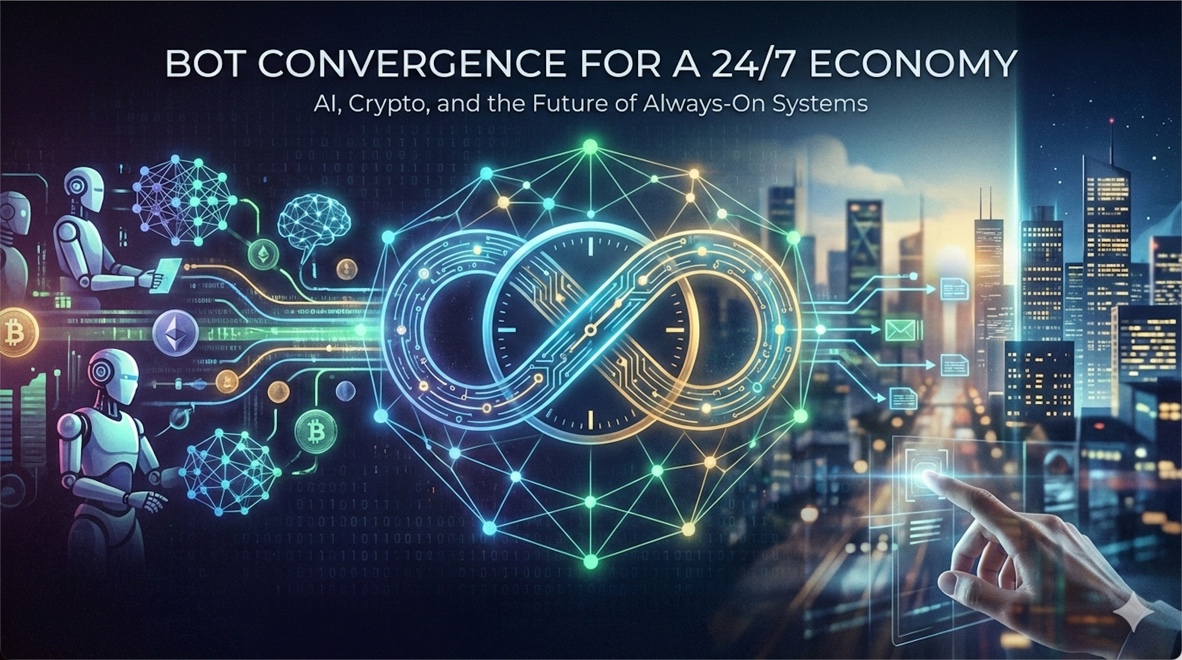
Bot Convergence for a 24/7 Economy

February 6, 2026 By Scott

There’s a lot going on right now. But I’m sensing there’s a unifying theme. I think it’s something to do with driving towards a fully always on 24/7 economy. As crypto truly merges with traditional finance (TradFi), and AI continues in its overall capabilities plus agentic and bot autonomy, what do we get? Or rather, what are we driving towards; good, bad or otherwise?

I like to try to write about things related to digital product management or at least somewhat practical things. This isn’t that. This is more digital culture and culture in general. These are just some thought explorations I’ve had while playing across multiple technologies. It’s an attempt to look around a few corners based on an admittedly vague sense of where some of these things could be converging. And it’s going to feel like a somewhat random walk to try to get all the puzzle pieces in place. And there are several pieces. I promise I’ll eventually get to a point though.

If you have other things to do, now’s the time to bail out! Otherwise…

[Read more…]

Filed Under: Crypto, Product Management, Tech / Business / General, UI / UX

Why Crypto Cards Will Finally Disrupt Credit Cards (Soon)

January 27, 2026 By Scott

Maybe I’m just being targeted with more card offers, but between my experience and research for a small payments project, I’m seeing more crypto companies roll out traditional-looking cards. It’s a smart strategy: crypto is still cryptic, so familiar packaging becomes a Trojan Horse into the market. People have been talking crypto-card growth spurts for years (see i2c in 2022), and some still call it a slow roll, especially after multiple “crypto winters.” However, it feels the pace is picking up, so I dug in and wrote up why.

What’s changed? This article is my take, part as crypto enthusiast, but mostly through a strategic product lens. The bigger picture is an industry that’s enjoyed near-unchallenged dominance for decades, and suddenly the landscape is getting complicated. Card networks remain entrenched, but the last few years added simultaneous pressure from regulation, real-time bank rails, and shifting consumer payment preferences, making the ecosystem materially more complex. It may look like the upstarts cooled off as the hype faded. I think that’s a dangerous assumption and a setup for surprise. Let’s look at what’s been happening and why I believe we’re closer to new inflection points than ever.

By the way, this isn’t a prediction that revolving credit disappears. Many find value in it regardless of how destructive it can be to personal wealth. This is more a prediction that the card bundle (payments + rewards + account relationship) shifts to wallets, leaving traditional issuers with less pricing power.

TL;DR Spoiler: You don’t have to do anything just yet. Though you may want to explore as a consumer to see if you can get better rewards. As a merchant, just keep an eye out for evolution here. Customers may abandon shopping carts or avoid you if you don’t offer their payment method.

That’s it. Stop right here!

However, I believe in deeper holistic and strategic marketplaces views. So if you want the long form in-depth reasoning, here you go…

[Read more…]

Filed Under: Crypto, Product Management, Tech / Business / General, Travel

Web3 / DeFi Trust Deep Dive

January 2, 2026 By Scott

We should understand the nature of trust in some of our newer evolving financial systems, especially as they merge or outright collide with traditional systems. Part of the whole sell for DeFi is about being able to securely transact in so-called – and unfortunately labeled – trustless environments. What “trustless” really means and enables here is permissionless execution without dependence on discretionary gatekeepers. Or rather, trust comes from sources other than the default historical authoritative nature of traditional centralized institutions within traditional finance, as enabled and regulated by government. Regardless of whatever more self-sovereign dreams of DeFi may have been or remain, this realm does not eliminate the influence of law, regulation, or government, especially once assets touch the real world. Still, DeFi reduces reliance on operational discretion of institutions, and provides a variety of new values from Global, always-on settlement to programmable money, interoperability, inclusion, and so on.

[Read more…]

Filed Under: Crypto, Tech / Business / General, UI / UX

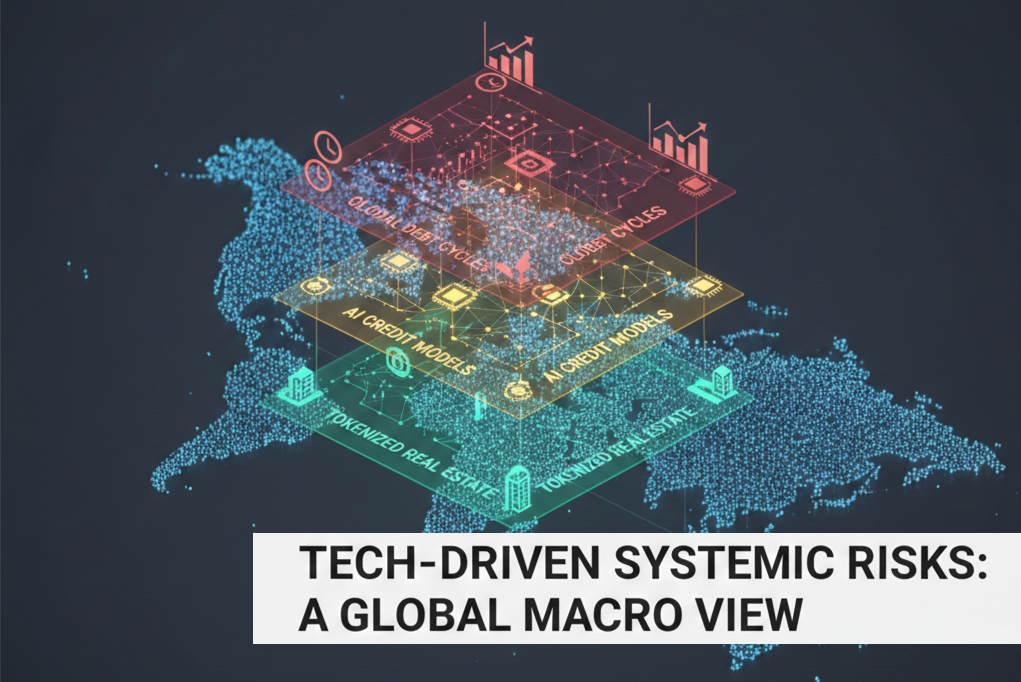
Tech Driven Financial Systemic Risks to Watch

December 26, 2025 By Scott

Note… Nothing here are predictions. Only what I believe are plausible issues worth attention. Nothing is intended as doom and gloom. The point of identifying risks is to consider ways to mitigate or eliminate them. With that in mind, there’s some things I’ve been getting concerned with lately.

Crypto, DeFi, and AI, seem to have things in common besides being disruptive and interesting, and that’s risk beyond their spheres of influence. I’m optimistic about long-term outcomes, at the same time success usually isn’t a straight line. Risks include how individual sectors can impact wider markets. Some technologies don’t just succeed or fail internally, but reshape industry plumbing, incentives, and reflexes in the larger scale marketplaces, often faster than institutions can adapt.

[Read more…]

Filed Under: Crypto, Tech / Business / General

Identity Phonership – You, Yourcellf

December 15, 2025 By Scott

First off, apologies for the bad puns in the headline. I am a dad though. So bad dad puns just come with the territory. Here, I saw a chance for a double, so had to take it.

Today it’s time to discuss some pros, cons, risks, and mitigations for the reality that our cellphones have accidentally become our gatekeepers to all manner of things digital. And often physical as well. You likely already know how integrated, (and dependent), a lot of digital activities have become on our mobile devices. But how? And what might this mean? Smartphones as identity gatekeepers has been discussed before. However, what we’re experiencing now in the mid 2020s is arguably a new level.

How did our cell phone companies become the gatekeepers of our identities?

How many things now push for multi-factor authentication via our smartphones? There’s products where it seems if you don’t have a smartphone, you’re simply not going to be able to participate. How might this play out? Do phone companies know about this? Of course. Will they try to exploit this role to just extract more fees given they’re arguably in strategically poor commodity businesses with competitive margin pressure?

Phones are no longer just credentials; they’re becoming identity custodians. Security is often thought of as three things: What you have, (such as debit card), what you know, (PIN code), and what you are, (biometrics.) With our phones we seem to have shifted from just something you have to the thing that vouches for everything else.

Recovery, coercion, or loss were not first-class design considerations.

[Read more…]

Filed Under: Marketing, Product Management, Tech / Business / General, UI / UX

Child Digital Threat Surface Area Roundup 2025

December 12, 2025 By Scott

Not long ago I wrote about GenAI and kids and what we do in my own family to try to make them useful and avoid the pitfalls. It feels weak now, even just a short time later. As I’ve looked into this more, the numbers and trends are disturbing. More kids are dying or having other bad things happen. It’s not just the usual “if it bleeds it leads” news cycle impinging on my personal awareness. More incidents are happening. And what we’re facing as parents is getting worse fast across multiple venues.

Any of us building digital products, (parents or not), should have some awareness of what’s going on regarding the widening and deepening digital threats faced by kids and do what we can do to deal with it, though this writeup is targeted more at parents. Yes, it might be true that we all have digital and online risks, but of course, kids are all the more vulnerable. I’m writing this because I’ve been having more conversations about this lately with other parents, especially some that don’t work in digital.

[Read more…]

Filed Under: Tech / Business / General

  • 1
  • 2
  • 3
  • …
  • 14
  • Next Page »

Recent Posts

  • About Stablecoin Issuer Controls
  • Are Boomer & GenX Workers About to be More Valuable?
  • Maintaining Healthy Cognition Living With AI
  • Re-Thinking Build vs. Buy: AI’s Hidden Costs in Product P&L
  • Bot Convergence for a 24/7 Economy

Categories

  • Analytics
  • Book Review
  • Crypto
  • Marketing
  • Product Management
  • Tech / Business / General
  • Travel
  • UI / UX
  • Uncategorized

Location

We're located in Stamford, CT, "The City that Works." Most of our in person engagement Clients are located in the metro NYC area in either New York City, Westchester or Fairfield Counties, as well as Los Angeles and San Francisco. We do off site work for a variety of Clients as well.

Have a Project?

If you have a project you would like to discuss, just get in touch via our Contact Form.

Connect

As a small consultancy, we spend more time with our Clients' social media than our own. If you would like to keep up with us the rare times we have something important enough to say via social media, feel free to follow our accounts.
  • Facebook
  • LinkedIn
  • Twitter

Copyright © 2026 · TetraMesa, LLC · All Rights Reserved