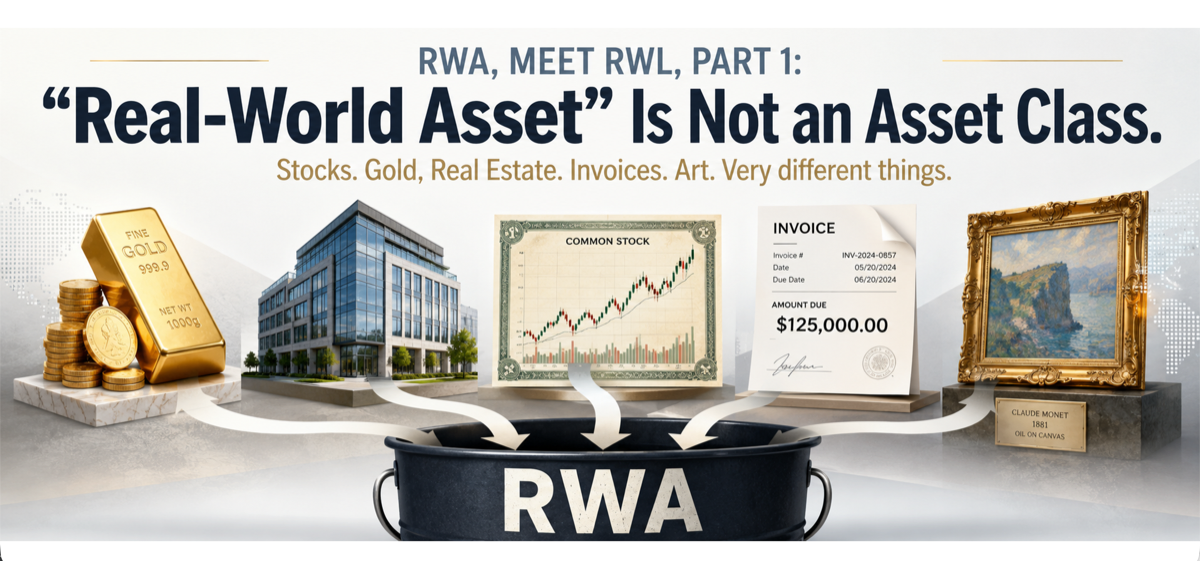
Part 1 of 6 in “Real World Assets (RWA), Meet Real World Lies (RWL): Knowing What You Own in the Tokenized World,” a series about what tokenized assets represent, how information about them reaches the blockchain, and why none of this eliminates the need for trust.
RWL is what I’m calling “Real-World Lies.” That might seem a little strong. Maybe it is. But I don’t necessarily mean “lies” only in the malicious sense. There are also mistakes, omissions, outdated records, stretched definitions, poorly understood rights, and information distorted by incentives. Right now, there seem to be plenty of ways for something that isn’t quite true to enter a system, become tacitly accepted, and continue moving through it as though it were fact. This series looks at how that happens, at least somewhat. But more importantly, how to classify and evaluate the many parts that finally seem to be coming together to bring more tokenized assets to market.
Much of the following is not new. If you’re already deeply familiar with tokenized assets, you may want to skip this entire series. However, if you’re still new to Real World Asset and trying to get a sense of the whole big picture, perhaps this series will help. It was created as part of a project to help some new to the area to build a wide scope taxonomy of the space and the issues across types of things involved. This isn’t about mechanisms of tokenization. We’ll be more focused on compare and contrast with real world assets and building an evaluation framework that helps us navigate these spaces.
[Read more…]