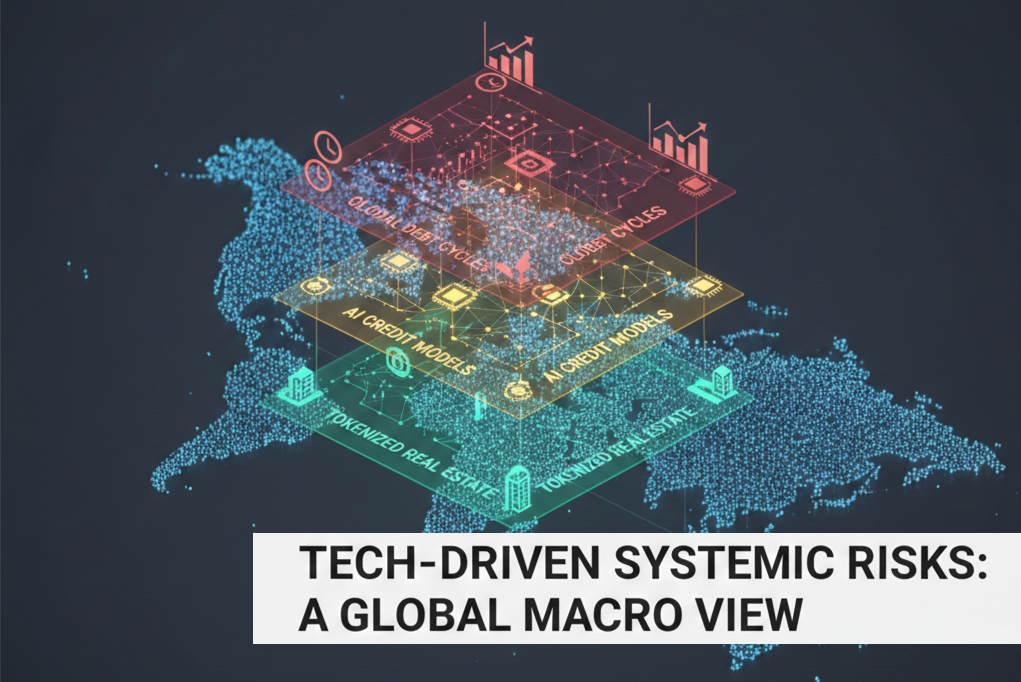
Note… Nothing here are predictions. Only what I believe are plausible issues worth attention. Nothing is intended as doom and gloom. The point of identifying risks is to consider ways to mitigate or eliminate them. With that in mind, there’s some things I’ve been getting concerned with lately.
Crypto, DeFi, and AI, seem to have things in common besides being disruptive and interesting, and that’s risk beyond their spheres of influence. I’m optimistic about long-term outcomes, at the same time success usually isn’t a straight line. Risks include how individual sectors can impact wider markets. Some technologies don’t just succeed or fail internally, but reshape industry plumbing, incentives, and reflexes in the larger scale marketplaces, often faster than institutions can adapt.
Example: Did the early 2000s dot com bust really matter that much to everyone? As painful as it was, the larger scale answer is “not really.” For all the losses, it was mostly contained to a sector and investor class. It may have contributed to a mild recession and other second-order effects, but not drastic systemic failures. The 2008 financial crisis on the other hand, had worldwide impact. Mostly thanks to tragically poor risk management and creation of creative housing assets.
How about 2026? How much risk is in the wind? Should we buy bitcoin? Shift some investments into safer bets ? Maybe some of us want to add risk in hot speculative areas. Some are bound to be generational winners. Following are some risk considerations. The direction to take is your own.
Risk Vectors: Big Picture
Consider upcoming points as aspects of larger scale systemic risk. Maybe one alone doesn’t cause a shock. But several? Let’s look at Richard Rumelt’s “Good Strategy Bad Strategy” where he discusses errors in human judgement and behavior, and evaluate if there are parallels now.
- Engineering capability is outpacing institutional comprehension. Example: Look how we threw our Generative AI tools into the world and now scramble to add observability tools. Minimum Viable Product ethos rules over deep quality and ethics concerns; at least until we run into walls.
- Risk is externalized. Risks of some AI, especially to kids, is slowly coming into focus. There’s been no real consequences. So the answer is not to slow down. So we have to sort that out.
- Herding is amplified by social and algorithmic feedback. The Fear of Missing Out (FOMO), seems as powerful as ever. Everyone gets it now. “Hey, EVERYbody… OVER HERE!” seems to be a valid strategy.
- The inside view or “This time is different” is quietly embedded in product design. “This time is different” might be in investor decks and analyst commentary. Today, it lives in defaults, thresholds, automation rules, and UX choices. When a product is designed as if extreme conditions won’t occur or won’t matter that belief stops being rhetoric and starts becoming infrastructure. Look at the Dec. 22, 2025 automated vehicle stoppage in San Francisco because traffic lights went down with a power outage. Smart people worked hard on this product for a long time, being very serious about regulatory, safety and liability risks. And they missed this. What else might we be missing? Here and elsewhere.
The 2008 financial crisis has been analyzed ad nauseam. Let’s sum it up saying there were layered hidden risks that came back to bite hard. If we study history to predict or change the future, why don’t we seem to learn? Famed investor Ray Dalio teaches us about macro patterns in books and numerous posts. (See: Principles for Dealing with the Changing World Order: Why Nations Succeed and Fail, and How Countries Go Broke: The Big Cycle.) He’s not dour as so-called “Dr. Doom” economist Nouriel Roubini, (See: MegaThreats: Ten Dangerous Trends That Imperil Our Future, And How to Survive Them), but still, where we are in a very large scale economic cycle should give one pause. The problem is the timing and whether we can do anything about it.
Even though few, we are at least starting to see guardrails in some areas. In Europe, MiCA (Markets in Crypto-Assets) has established reserve and capital requirements. In the US, frameworks like the CLARITY Act and GENIUS Act have moved stablecoins from the “Wild West” to reserve-backed, audited instruments. And having more traditional institutions implementing tokenized assets should bring more institutional risk management. Still, these things might not be evolving as fast as the marketplaces. One question that may persist is how much risk will continue to exist in shadow parts of token economies. That is, if Europe, (perhaps among others), prohibits privacy coins and anonymous sovereign custody in 2027, how much underground, unregulated value will possibly still have an impact on traditional finance.
Risk Vectors: Specifics
Real World Asset (RWA) Tokenization
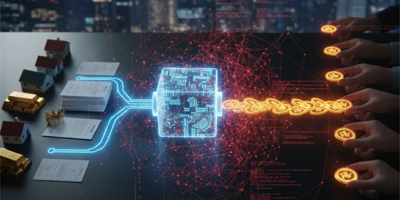
RWA tokenization looks boringly sensible. Take illiquid assets like real estate, invoices, treasuries, royalties, and wrap them in digital rails, improve access, reduce friction, increase transparency. What’s not to like? It’s said to “democratize finance.” Except some of it may be a mess. Why? Because there’s irony in the transparency blockchain can offer coupled with complexity in real world truth. We can build oracles to feed off chain data in, but the veracity of that info may be challenging. When everybody has a tiny piece of the local strip mall deal, what will governance really look like? Remember tokens may grant economic rights, but not true ownership, (at least not yet), leaving investors with limited recourse.
By mid-2025, the RWA market ballooned to $23-30 billion, up from under $10 billion in 2023. (Global RWA Tokenization Industry, The Quiet Rise RWA Tokenization.) However, could this growth mirror the leverage pitfalls of 2008’s CDOs. The concern is Rehypothecation; the re-pledging of assets. In this case, tokenized assets as collateral that amplify leverage across chains, creating opaque cascading risk. Will liquidity illusions arise when tradable tokens mask underlying illiquid assets, sparking fire sales in downturns? Complexity from composability and smart contracts might obscure true exposures, much like subprime bundling, while reliance on oracles introduces vulnerabilities. Yes, you should be able to see every transaction and re-pledge of an asset. Will risk models really be able to model those full chains? Maybe. Still, that’s a lot of dependency.
The risk is where RWA quietly plugs into the larger financial stack because it isn’t a cute idea or toy anymore. See: RWA Report 2025: When Crypto Gets Real.
Tokenized RWAs:
- Become collateral in DeFi and CeFi.
- They get rehypothecated across platforms and this is part of the scary part. This is the building of what might become deeply hidden leverage dependencies that are effectively opaque even though transactions seem transparent.
- RWA will likely have to use model-based valuations, not continuous markets.
- Create liquidity illusions. This is another main scary part. Assets that appear liquid because tokens trade, while the underlying asset is not very liquid at all.
This is structurally similar to pre-2008 securitization, but with two critical differences:
- Settlement is faster
- Risk dispersion is broader and less visible
When RWAs are used as collateral, stress could cascade and emerge quickly. Price oracle wobble → margin calls → forced liquidations → collateral haircuts → confidence shock.
I believe in RWA. My concern is it’s happening so fast there’s going to be too much room for games by those who are smart enough to externalize their risk. The ERC 3643 protocol still depends on a messy real world being more transparent than it’s used to being. By the way, I’ve been talking about RWA in terms of what most people think of as hard assets, not securities. Of course, we’re also moving towards tokenized securities, actual stocks. Maybe we’ll even start calling these tokens stablestocks since they’ll probably be backed by actual securities in the traditional sense. Which has some irony given those are also just ledger entries in an older system anyway.
AI Collapse
When people hear “AI risk,” they seem to think existential narratives or job displacement. Financial risk is more mundane. AI is embedded in credit underwriting, fraud detection, risk scoring, portfolio optimization, market-making strategies, compliance and more. The issue isn’t that models will fail. It’s that they may fail together. Systems might optimize for similar objectives. What happens if under stress, this creates synchronized error? If multiple institutions tighten credit simultaneously, withdraw liquidity simultaneously, misclassify risk simultaneously, this could cause systemic problems. The stock market has some circuit breakers built in. But not in this realm yet. If there’s good diversification of models vs. some AI monoculture, maybe this won’t be as dire an issue.
There’s another risk in financial markets. If venture funding dries up amid unmet expectations, valuations plummet, dragging down tech-heavy indices and spilling into broader markets via correlated assets. This is another area where history has some guidelines. Again going to Richard Rumelt, he talks about economics of the early long haul fiber industry and how things get down to is unit economics. The AI business might not be great here. (See PM Perspective: Is AI a Great Business?) AI increasingly looks like a commodity business. The question is, have we learned from these things? Is AI different? It might be, but maybe not. Wall Street just wonders what might pop this bubble, given trillions in a handful of companies. And if AI is not different and pops, will any cool down remain within the confines of its sector? Or spill over into cloud providers, energy providers, more? Again, the question here is if a problem in one area has systemic risks beyond the sector and are intertwined with other frothy sectors.
AI Trading: Crypto and Otherwise
In crypto, where markets run 24/7 and liquidity can vanish quickly, AI creates conditions for abrupt cascades. In traditional markets, herd behaviors risk overwhelming circuit breakers designed for human-paced decisions. In this case, the danger isn’t rogue algorithms. It could be well-behaved systems doing exactly what they were designed to do, simultaneously, under stress at any time day or night. Next, couple this with perpetual futures in crypto. (Basically futures contracts that never expire and could trigger liquidation feedback loops, which could be using RWAs as collateral.) Now you have a real party!
See: How $3.21B Vanished in 60 Seconds: October 2025 Crypto Crash Explained Through 7 Charts.
Stablecoin Rails Have Pros and Cons
Stablecoins are going mainstream for good reason. They increase velocity of money, free up trapped capital, and should reduce counterparty risk. But let’s think in terms of winners and losers. That “trapped capital” is in use. Businesses maintain large balances on occasion because of working capital needs. Fast rails may benefit many, but can collapse liquidity buffers.
So what’s the problem? Fast rails change who bears risk and when. Traditional finance benefits from settlement delays, clearing buffers, netting periods, human override windows. Most seem to say good riddance to these middlemen. Stablecoin rails remove those buffers.
Yes, instant settlement increases velocity. But velocity can cut both ways. Liquidity that once sat as working capital now moves instantly, and flees instantly under stress. In a panic, stablecoin holders don’t wait for branches to open or wires to clear. They click. This can turn confidence shocks into liquidity vacuums. While stablecoins are supposedly fully backed, markets don’t test backing during calm, they test during exits. Even though thought of as crypto, somewhere down the line these assets are in the TradFi banking system. And this race for the exits would still stress that. Remember way back in 2023 how both Silicon Valley Bank and Silvergate got trashed? They weren’t insolvent right off, but their liquidity crisis did them in. Stablecoins don’t eliminate TradFi, but they might route stress into it faster.
In traditional banking, “friction” (bank hours, manual wire approvals, 2-3 day settlement cycles) acts as a natural brake. It gives institutions time to liquidate assets or for regulators to step in if there’s systemic issues. There’s a name for it in crypto called the velocity paradox. “The paradox: The more useful a token becomes for fast transactions, the less valuable it becomes as an investment.” (See Understanding Token Velocity.) “Digital bank runs” could happen faster than institutions could respond. Meanwhile, Coinbase’s 2026 Crypto Market Outlook Report says of stables, “…stablecoins have shifted from a trading convenience to core financial plumbing, embedding programmable settlement into real commerce and market infrastructure. Their early days as a niche concept have been replaced by a utility that is rapidly becoming indispensable to the broader global financial system.”
De-Dollarization Attempts
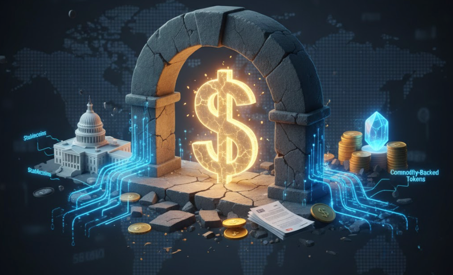
I once wrote about De-Dollarization Risks from Crypto and AI. My concern was crypto would put the U.S. at risk of getting de-throned as the world’s reserve currency due to crypto. It seems I was wrong. Mostly because of stablecoins taking off. (Including U.S. regulations finally getting a clue.) Still, there’s plenty who want to take away that exorbitant privilege. De-dollarization is often framed as ideology or geopolitics. But there’s other issues. The dollar’s strength isn’t just its reserve status, it’s that it provides deep collateral markets and liquidity during stress. The ironic reason for less risk of de-dollarization is that most stablecoins get their stability from most often being backed by dollars.
Then again, Coinbase has another report, Dethroning the Dollar, from May, 2025 that points out some ongoing risks here. Partial de-dollarization wouldn’t replace the system. My question is how much would it weaken the shock absorber without installing a better one.
That’s the risk.
Quantum Computing in the Wrong Hands
Okay, okay. Enough is enough for now. This one can wait. A little while anyway.
Paranoia Vs. Prudence
It’s the same old question. All eggs in one basket? Or concentrate on opportunity? Or diversify more? Some say put all the resources towards your best bet. The more prudent suggest diversification. The question becomes, how much so and where? In this situation, or maybe any situation with a frothy market, what do you take off the table and store safely vs. fear of missing out on further upward moves? We all know the cycles. We just rarely know when. The thing with tech induced crashes though, is the signals will likely happen fast if history is any guide.
So, What to Do?
To me, prudence isn’t about betting against the future; it’s about staying solvent long enough to participate in it. If the past few decades taught us anything, it’s that the most dangerous risks are the ones we normalize while everything still feels fine. I could be wrong about all of this. Maybe this time is different. Maybe everything will be fine. It could be that what we’re actually building is the most audited, transparent, and regulated financial rails in human history. However, we’re not quite there yet. It just seems that more and more the whole Black Swan thing isn’t true. That is, so-called “rare” events aren’t that rare. Or unpredictable. Remember that one of the precepts as Talib describes this is: “A Black Swan is an event that lies outside the realm of regular expectations, because nothing in the past convincingly points to its possibility.” But if these various shocks come with such regularity, should they really be so far out of our expectations? Are they really so unpredictable?
I think maybe it’s time to take a deeper systems view approach to looking at things. Because maybe there are ways to see some of these risks and there may be ways to manage them. If we see them. And I’ve always kind of thought one of the best ways to see something is to actually look. Seems obvious enough. The challenge is there’s nothing common about sense, especially when we all have our perceptual filters on. It seems some of these things are like when you misplace your keys or your cell phone. Maybe you put it down someplace you usually don’t. You’re looking. It’s right there in front of you. It’s just all the clutter around it made it hard to see. Personally, I see 2026 as delivering even more wonders. At the same time, tech alone seems to be developing interdependencies that suggest risk. And all this even before considering a world macroeconomic outlook at historically high debt and also valuation multiples. Just some things to consider. I’m not making some kind of market call, and I’m not suggesting some imminent collapse of anything. It just seems there’s a reduced capacity for resilience and it’s maybe worth acting accordingly.