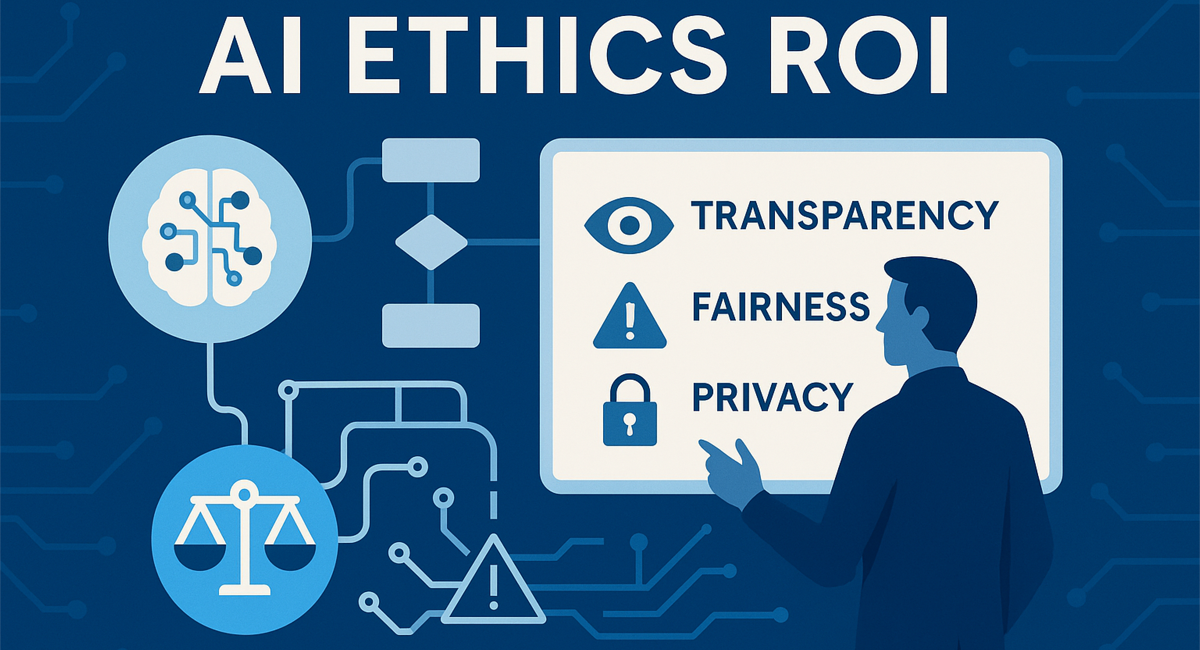
You’ve probably read about AI ethics. I want to go beyond the basics and sell you on the ROI of AI Ethics. We’re talking basic consumer and B2B issues here and more accuracy, not wider scale issues like battlefield autonomy or similar use case issues. I’ve worked on a few AI projects over the past year: one more retrieval-based (prompt/response) and another more generative (content creation with human oversight), plus some testing work. With today’s tools and vendors, you can often kick something out that seems solid pretty quickly, whether it’s a generative product or something using more traditional tools like predictive analytics. Doing it truly well, though, is sometimes orders of magnitude harder. It can be tough to justify the resources to do it right.
Here’s a cynical thought about AI ethics. Often, companies don’t really care. Actually, that’s too cynical. People may care, however, if you look at where pressure and resourcing usually go, it’s often more towards speed to market and growth, with maybe a thin layer of regulatory compliance. A few companies differentiate on quality. But most seem to be more in the feature race. “Non-functional” requirements? We’ll get to them. At some point.
This doesn’t mean everything needs to be perfect. If we waited for 100% certainty, nothing would launch. We make tradeoffs: a light/dark mode toggle is not an emergency cardiac-alert system. People get that. Especially AI, which is harder to understand and harder to control. How can we deal with these realities?
Algorithmic Accountability
We’ve seen the headlines: an algorithm biased against certain demographics in hiring, a credit scoring system unfairly disadvantaging minorities, or a chatbot spewing hateful content. These aren’t just technical glitches; they are ethical failures with consequences. The uncomfortable truth is: as products become opaque and autonomous, responsibility for ensuring fairness, safety, and transparency becomes more challenging. Who owns this mandate? By virtue of owning the experience, product strategy, and the bridge between technology and business, the Product Manager must embrace a new role: Chief Ethics Officer of the AI Product. OK, so that’s not likely to be your title. Though it is another thing on your plate now.
Accountability: More Than Just “Do No Harm”
Algorithmic Accountability goes beyond basic quality assurance or simply trying to “do no harm.” It means the ability to explain, justify, and, critically, remediate the decisions made by an AI system. It demands proactive vigilance, not just reactive damage control.
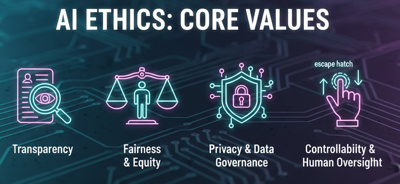
At its core, the PM’s ethical mandate rests on several pillars:
- Transparency: Users must understand when they are interacting with an AI system and how their data might be influencing its decisions. This includes disclosure of Generative AI usage.
- Fairness & Equity: The algorithm must be designed and monitored to ensure it does not create or perpetuate systemic bias.
- Privacy & Data Governance: Strict oversight is paramount over the data used to train, test, and operate AI models, adhering to global regulations and user expectations.
- Controllability & Human Oversight: Users need mechanisms to provide feedback, correct errors, or opt-out of certain algorithmic interventions. There should be an “escape hatch” to human intervention when critical decisions are involved.
Business Case for Ethical AI
Here’s the sell part. Here’s what I’m asking you to buy. And what I’m suggesting you sell to others if you need in order to get resources to do the right kinds of things. Ethics isn’t just a philosophical thing. It’s a pragmatic investment. The trick is seeing that. Excepting those that really do inculcate meaningful values, companies seem to treat ethics issues like overhead. “We’ll get to it later.” But later is more expensive. And when things go wrong, they don’t go wrong quietly. It’s understandable that ROI vs. Cost can be a challenging argument with AI as many organizations struggle to find just what ROI it is that AI is providing in the first place.
Risk Mitigation / Avoiding Expensive Rebuilds
Yes, ethical design reduces the obvious: fines, lawsuits, headline-level failures. But the bigger story is this: when you discover bias or misuse after launch, it’s likely not just a bug fix. It’s a rebuild. The data pipeline, maybe the model, the evals, maybe the UX. Dollars spent preventing harm early can avoid 10x or 100x dollars in cleanup. Look at Google’s photo labeling errors. And how much did Amazon’s scrapped biased recruitment software cost? Speed is great. Speed that drives straight into a wall is expensive.
Trust → Retention → Pricing Power
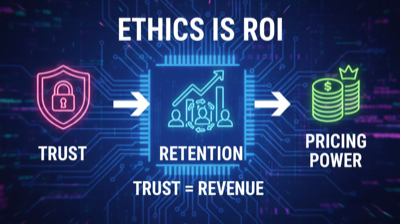
Customers might not have have good ways to evaluate product privacy and security. However, they do feel when something is off. Ethical AI earns trust, and trust earns longer retention. In enterprise markets, it can earn premium pricing. Per Accenture’s 2024 Empowered Consumer report, 85% of consumers say personal data protection is important when using conversational AI tools. Yet only 39% trust companies to have good intentions, and just 43% trust them to make honest claims. And the Privacy issue? Consumer privacy challenges used to be kind of a negative externality upon which a lot of consumers really wouldn’t bother taking action. But now? Cisco’s 2024 privacy survey shows 83% say they’re willing to act on privacy issues and 51% say they have. PwC’s Future of CX report found that 71% of consumers would pay more for companies they trust with personal data; a direct link between trust and pricing power. Not convinced? Deloitte’s 2024 Connected Consumer Survey found trust in AI systems directly increases adoption and ongoing engagement; essential components of retention. Note these quotes: “Transparency and ease of control correlate with higher trust and higher spend.” And, “Nearly two-thirds of respondents (64%) said they would be very or somewhat likely to switch to a new tech provider if an incident diminished their view of a current provider’s trustworthiness.” To sum up, people aren’t being as passive as they used to be. And they have choices.
Trust isn’t soft. It’s revenue.
Faster Enterprise Sales Cycles
Procurement teams ask questions about transparency, data lineage, oversight, and explainability. If you’ve already built ethical guardrails into your product, you remove at least some friction from the sales process. Want to sell to the U.S. Government? Better check the memo.
Market Access: Ethics Opens Doors
Strong accountability lets you enter places you couldn’t otherwise touch. Finance, healthcare, government, EU AI Act markets, partner ecosystems with trust requirements. Ethical AI isn’t just protective. It’s expansionary.
Lower Operating Costs
Unpredictable AI behavior creates costs: escalations, moderation, manual overrides, patches to stop the model from saying something regrettable. Good guardrails reduce operational drag. Ethical systems are most likely cheaper to run. (Even if they’re possibly more expensive to create.)
Competitive Defense When Others Flame Out
Somebody out there will launch an AI feature that behaves badly in public. Your ethical posture becomes a moat when you can say, “We tested for that. We audit for drift. We disclose how decisions are made.” When others set fire to themselves, you can become the safer choice.
Predictability Is ROI
Ethics isn’t just about “fairness.” It’s about stability. Predictable systems create predictable businesses. That’s an ROI line item, whether people admit it or not. LTV is a core KPI for most businesses.
Talent
Good people want to build good things. Ethical practices attract and keep stronger teams. It’s been said people don’t leave bad companies, they leave bad managers. But they also leave bad companies. Most sensible businesses would prefer to have missionaries over mercenaries. Especially during a time when a lot of younger workers don’t have company loyalty because companies often don’t deserve it. To attract and keep the best, you actually have to practice a valuable mission and values; not just post them.
Liability
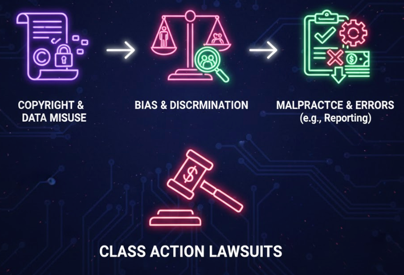
This could have come first because it’s so obvious and frequently displayed in the news. Obviously, making mistakes with AI can lead to all kinds of liability costs. We’ve already seen plenty, and that’s leaving aside the whole content copyright scraping issue. We have the Lemonade insurance issue, and Deloitte’s bad reporting with poor use of AI. AI Ageism anyone? And plenty more. It’s not as if we needed to create a fresh hunting ground for class action law firms. And yet, we have a whole new cottage industry for the legal profession.
Ethics as a Strategic Advantage
Ethics can let us go faster without driving blind. Mistakes will still happen. Still, fewer crises. Fewer rebuilds. Faster sales. Bigger markets. Lower costs. Higher trust. Better teams. More predictable systems. IBM says, “Investing in AI ethics directly correlates with superior business performance.”
In other words: Ethics is ROI. And PMs are the ones who have to sell that if it’s not already a core management value.
The PM’s Ethical Role
This new ethical imperative isn’t a standalone project; it’s interwoven into every phase of the product lifecycle.
Discovery & Strategy: Preventing Bias from Conception
The earliest stages are the most critical for preventing ethical pitfalls. As PMs define the product vision and strategy, they must consider:
- Training Data Audit: Before a single line of code is written, the PM must work with data scientists to audit potential training data sources for inherent biases. Is the data representative? Are there gaps that could lead to discrimination? This may get harder to do as data pipelines extend from the traditional into data marketplaces and agentic workflows.
- Ethical User Stories & Edge Cases: Introduce the concept of writing user stories specifically focused on ethical challenges and vulnerabilities.
- Defining Ethical Failure: Shift the definition of failure from merely “not meeting a conversion rate” to “perpetuating a harmful bias” or “creating an unfair outcome.”
Development & Testing: Mitigating Fairness
As the product moves into development, PM collaboration with engineering, data science, and UX becomes even more critical for ethical outcomes. Learn to understand how to create or work with partners to build rubrics and evals to evaluate products. (See Rubrics for Product Managers.)
- Fairness Metrics: Partner with Data Scientists to define and track Fairness Metrics, not just accuracy. This involves measuring model performance across different demographic subgroups.
- Red Teaming & Stress Testing: Actively commission internal or external teams to “red team” the AI system. Their goal is to try and break the AI, exposing biases, vulnerabilities, and potential for misuse.
- Explainable AI (XAI) Requirement: For mission and safety critical systems (e.g., medical diagnostics, loan approvals), the PM must insist underlying models offer a reasonable level of explainability. This isn’t just for regulatory compliance; it’s for auditing, debugging, and ultimately, building trust.
Launch & Post-Launch: Continuous Oversight & Audit
The ethical journey doesn’t end at launch. Continuous monitoring and a clear accountability loop are essential.
- The User Escape Hatch: There should be a way for users to understand, question, override, report, or escalate harmful or unfair algorithmic decisions. This could be a “report an issue” button or a clearly visible path to customer support.
- Continuous Monitoring for Ethical Drift: Establish real-time analytics and alerts for “ethical drift.” This means actively tracking if the AI’s performance or fairness deviates over time, perhaps due to concept drift in the data or unforeseen interactions.
- The Accountability Loop: Define clear processes for when an algorithmic error or bias is identified: how is it corrected? Who is informed? How is communication handled with affected users?
What’s Next
Product Managers are on the edge of algorithmic trust. In highly regulated industries, there may be an ethics or compliance officer of some sort. This might be true of other industries that recognize their risk profiles; such as AI technology providers themselves. For the many other use cases, (which are most of them), we might not have that support.
The rise of AI has amplified the role of Product Managers. With this comes ethical responsibility. The PM is uniquely positioned at the intersection of technology, business, and user need, making them the default owner of algorithmic accountability when there’s no one else assigned.
Our challenge, as Product Managers in this era, is to actively audit for potential ethical landmines. Ask the uncomfortable questions. Insist on transparency. Champion fairness. It would be ideal if ethical arguments alone could take you where you should go here. But if not, you’ve got the ROI and risk issues in your quiver.
Success of the next generation of digital products will not solely be defined only by their features or performance, but by their commitment to trust. (Personally, I think “trust” should be added as a continuum of sorts in some new kind of Information Architecture space that includes ambient overall signals; basically a next level of brand perception.) That trust begins with ethical product leadership. As we move forward, we’re also going to see things like tokenization of assets; both real world and data. And use of oracles or other methods to use data in either – or both – blockchain and agentic AI frameworks. The data supply chains are going to get even longer. Problem issues could get amplified along the way. Anyone who doesn’t want to see their product(s) in the wrong sort of news stories or lean about what a deposition is in person would do well to run the checklist on trying to do the right thing.
Postscript
As mentioned early on, this was focused primarily on typical B2C and B2B2C type AI use cases. I’m well aware there are hot running wider scope arguments. These include battlefield autonomous drones, use of AI to judge human affect, (things like emotions based on facial expressions, voice, etc.), and what might be done with that info, worker management and autonomous firing based on rate of work, and more. My purpose here is just to lay out a general typical Product point of view on some more “workaday” type products based on some recent experience and conversations, not dive in to these other topics, each of which requires massive societal consideration.
See Also
Foundational Industry Frameworks
Google – Responsible AI Practices
Microsoft – Responsible AI Standard (v2)
IBM – AI Ethics Guidelines / Trustworthy AI
OpenAI – Safety & Responsibility Framework
Government & Regulatory Frameworks
NIST – AI Risk Management Framework (AI RMF)
EU – Ethics Guidelines for Trustworthy AI (High-Level Expert Group on AI)
OECD – AI Principles
UK – AI Regulation Policy Paper
Industry Adoption and Speed Issues
PwC’s 2025 Responsible AI survey: From policy to practice
Everyone Wants Responsible Artificial Intelligence, Few Have It Yet
Implementing generative AI with speed and safety
PwC’s 2024 Trust Survey