TetraMesa

  • About Us
  • Services
  • Clients
  • Contact
  • Blog

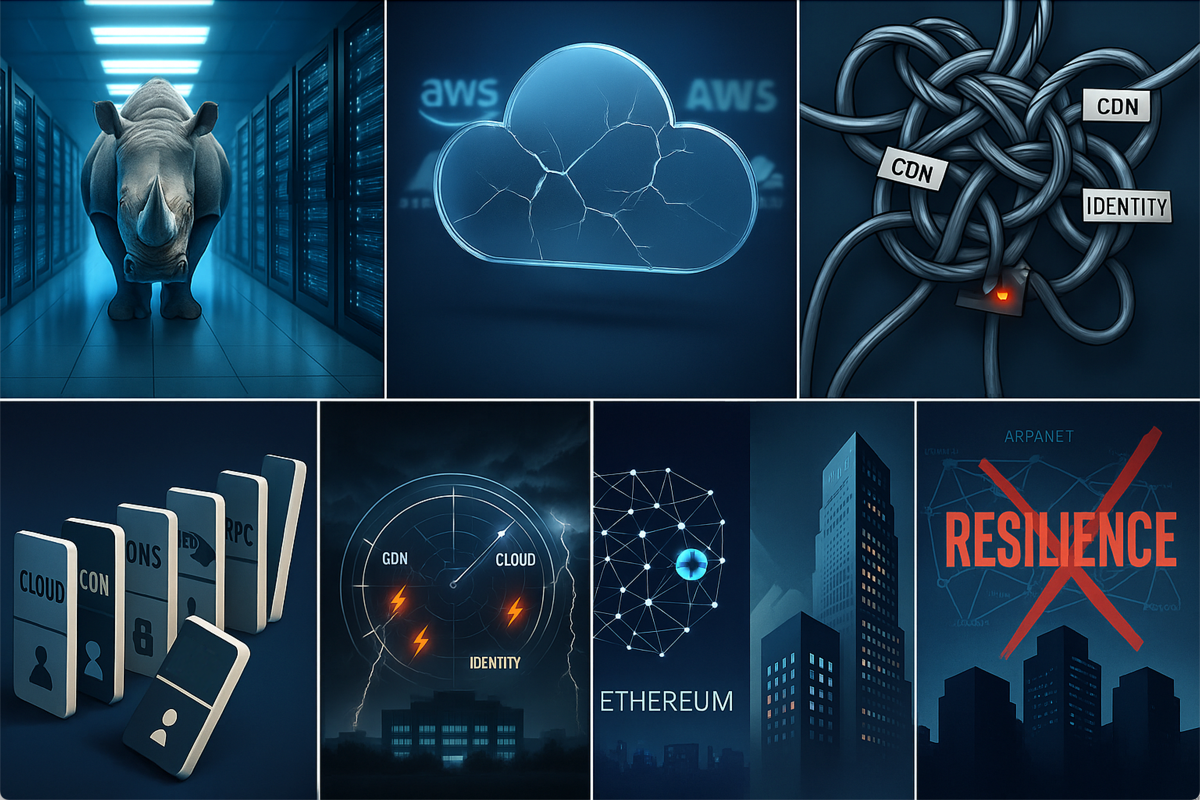
Your Outage Risk Feels Less Black Swanny

November 18, 2025 By Scott

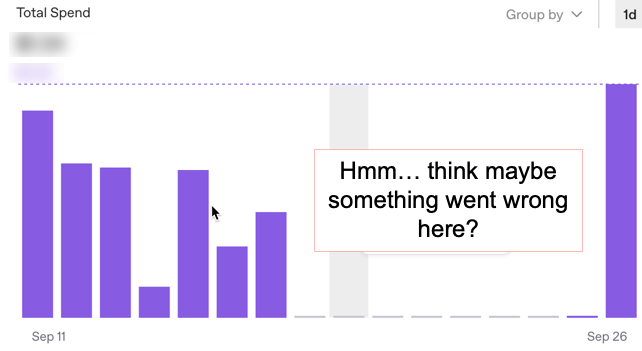
I’ve spent some time the past year on an important project, potentially life-saving for many. But if the site went down for a few hours or even a day, no one would die immediately. Maybe some revenue loss, but nothing catastrophic. What about yours? Is it mission or safety critical? Or doing so much business that a half a day is millions in loss? Not to mention the customer service issues?

Major digital outages keep happening. The Internet was designed to survive nuclear war, yet we’ve layered on centralization that increases failure risk. And it seems to be getting worse as new inflection points pile up.

[Read more…]
Filed Under: Marketing, Product Management, Tech / Business / General

Product Lessons from DeFi’s Rise

November 6, 2025 By Scott

If you follow crypto, you’ve likely noticed the rise in DeFi activity the past several months. As Traditional Finance (TradFi) evolves and co-opts parts of crypto, we’re seeing emergence of a hybrid model called Centralized Finance (CeFi) and watching what may be an inflection year. Every year seems like “the year of SOMEthing,” but with trillions finding new pathways, it seems a fair statement now. Growth of Decentralized Finance (DeFi) despite easier Central Exchange (CEX) options is telling. DeFi remains difficult and risky. Yet it’s growing as percentage of crypto activity. Some of this may be episodic, but it reveals a deeper signal about marketplace pain points: users will endure hardship just to escape worse systems. It’s a story of value over comfort, like drivers taking a pothole-filled detour to avoid a toll road they no longer trust, but there’s someplace they’ve just got to go.

[Read more…]

Filed Under: Marketing, Product Management, Tech / Business / General, UI / UX

Cryptocurrency and Fiat: Independence, Interdependence

October 26, 2025 By Scott

This article is a follow-up to “How Does Fiat Currency Become Cryptocurrency?“

Crypto’s original goal: self-sovereign, independent finance. Some see it as the dream; others impossible. Reality: separate system, yet as a practical matter, is often coupled to TradFi.

It’s a key nuance from the discussion of the on-ramping processes, liquidity provision, and reserve management. Crypto intertwines with fiat for access, valuation, and compliance, but this isn’t essential. Cryptocurrencies were designed as standalone assets, valuing from scarcity, decentralization, and network effects, not fiat backing. In practice, fiat bridges to tokenized economies for adoption/integration. It’s useful to further unpack this distinction, drawing on foundational principles of blockchain technology, economic theory, and legal frameworks.

[Read more…]

Filed Under: Crypto

How Does Fiat Become Cryptocurrency?

October 26, 2025 By Scott

A common disconnect I’ve heard about is how dollars seem to “magically” become crypto. If you already know financial rails, skip this article. The focus is more for retail investors or digital product managers who find themselves working more with crypto interfaces.

Spoiler Alert: There’s no magic. A fiat-to-crypto on-ramp swaps your cash for crypto; value “appears” when the crypto hits your wallet. It’s sort of like trading dollars for euros at an airport, except there’s no government backing or guaranteed redemption/liquidity. That’s it. All done. Deep dive below for a lot more!

[Read more…]

Filed Under: Crypto

The Composable Everything Future

October 22, 2025 By Scott

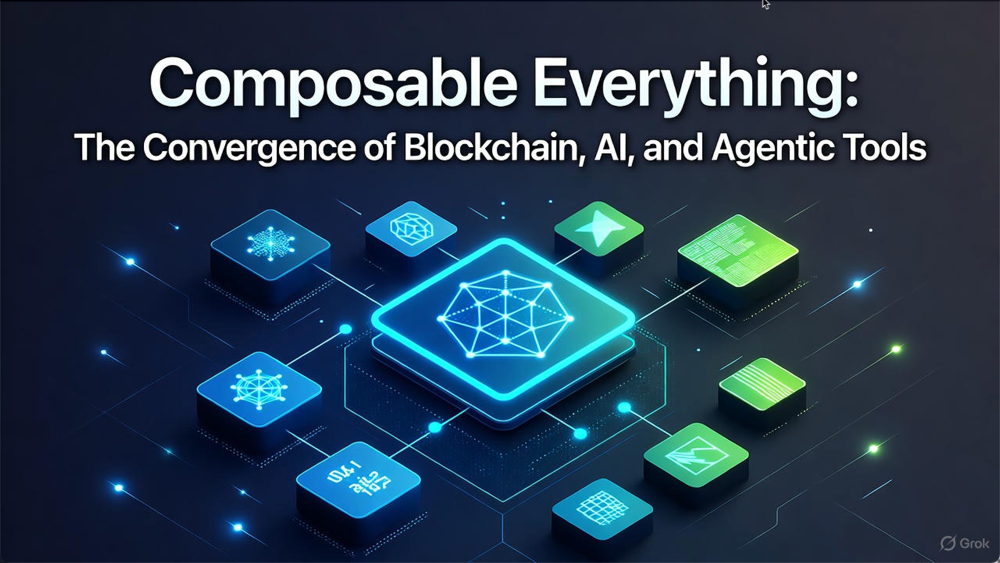
Something is happening across technology sectors creating one of those paradigm-shift moments. It’s not a single breakthrough but a convergence of pieces that have struggled to be the “next thing” on their own. Their larger use cases are emerging as they interact. Look across our shiny new tools: blockchain, crypto, and of course AI and more agentic systems. Together they’re forming connective tissue among themselves. Like generalized microprocessors once enabled hardware to be more useful and economical with flexible software, this new phase of composability could again transform speed, flexibility, and cost.

[Read more…]

Filed Under: Product Management, Tech / Business / General

Will RWA Tokenization Growth Increase Systemic Risk?

October 15, 2025 By Scott

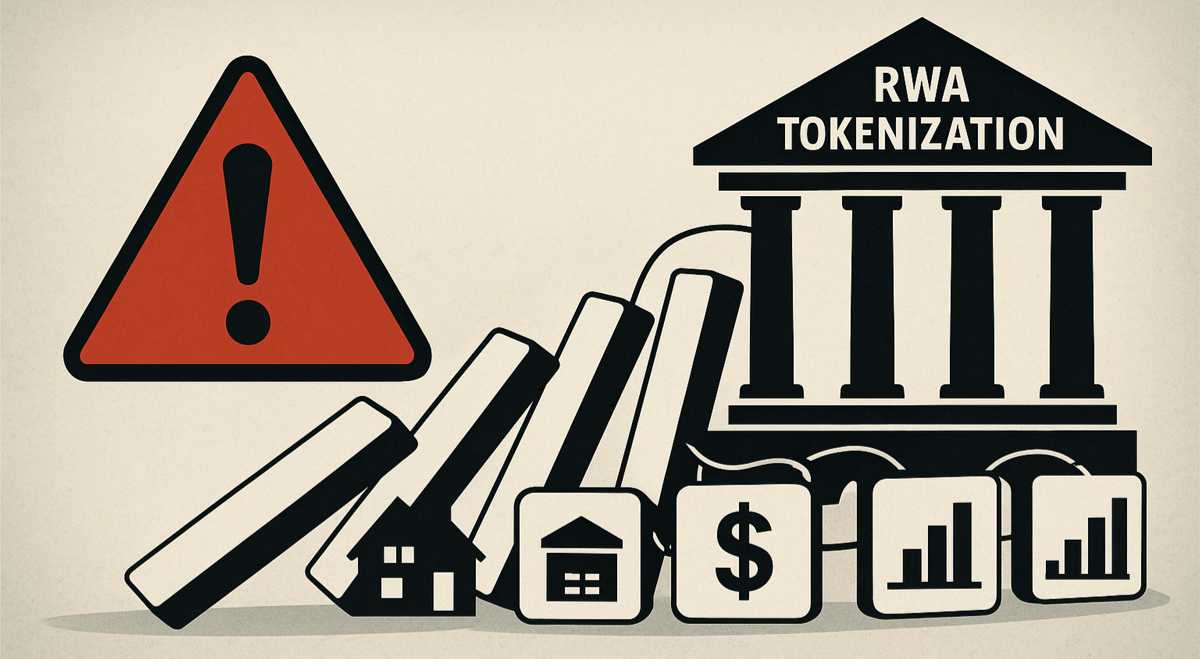
As a product person and retail investor, I’m sensing what I would have thought is an obvious risk with Real World Assets (RWA) tokenization, but don’t see much discussion beyond esoteric finance venues. I’m a believer in blockchain and crypto opportunities. However, I prefer a more thoughtful approach than the breathless crypto maxi hype spew. With that perspective, I’d like to offer a primer for product managers and investors interested in this area. I’m trying for a deeper sense of what’s going on than, “The RWA Tokens Are Coming, Invest Before You Miss It!” Or as Darth Crypto would say, “The FOMO is Strong with This One.” Disclaimer: I’m not a finance person… these are my explorations into this world as a retail investor and digital product builder. I’d just like to help my friends and colleagues with informed choices.

[Read more…]

Filed Under: Marketing, Product Management, Tech / Business / General

How to Capture Sales / Margin by Just Being Less Bad

October 7, 2025 By Scott

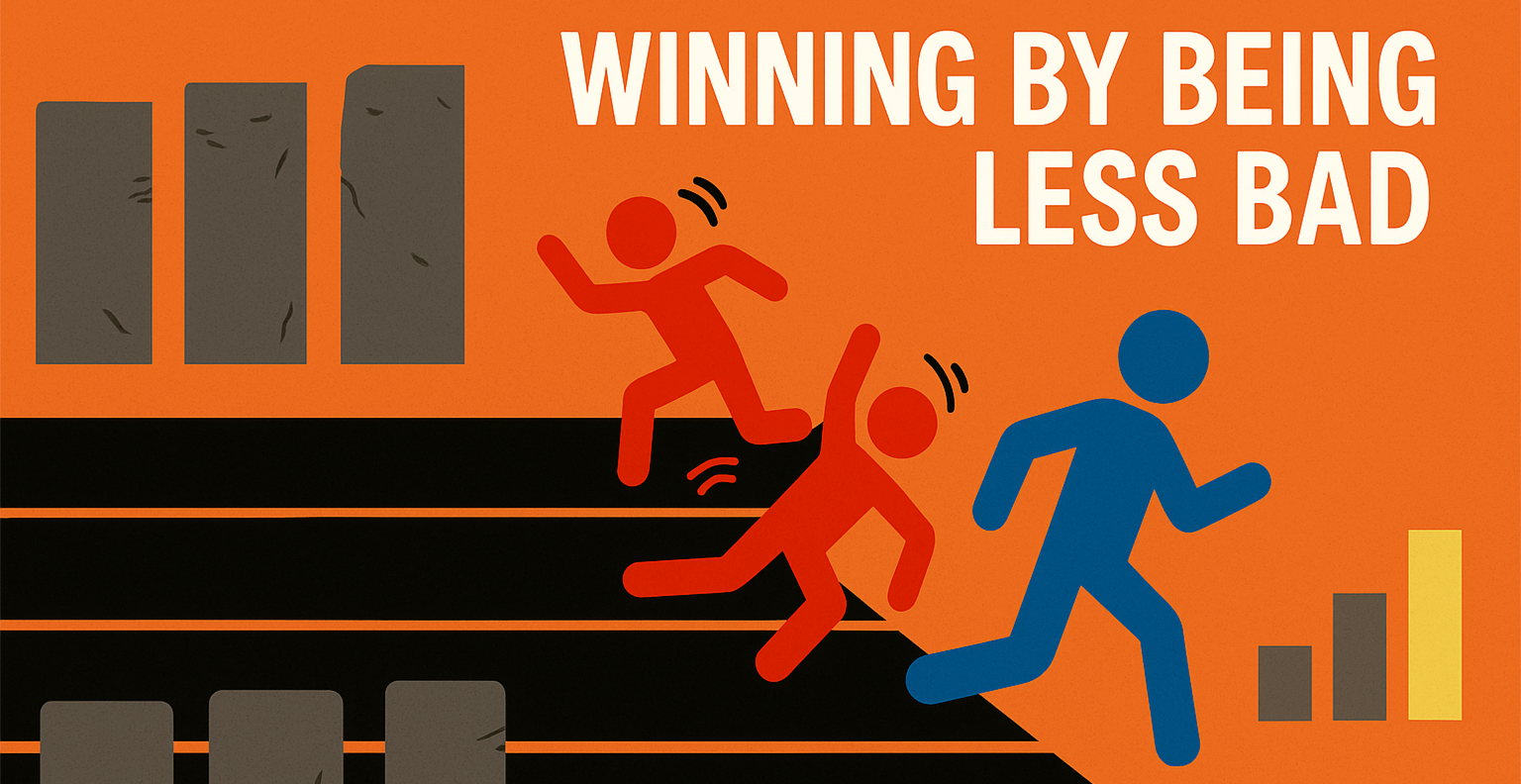
Maybe it was back-to-school season or random, but in my family we’ve recently switched multiple brands, vendors, and products for reasons from quality to service to pricing. Each move had friction: annoying phone calls, returns, learning new systems. How bad does something have to be to push customers past switching cost barriers to seek alternatives? Although I’m coming from a consumer perspective with this, it all applies to B2B as well.

I’ve shared my perspective on brand loyalty before. This is now about how average or bad is more frequent. For consumers, it’s frustrating. For product leaders, an opportunity. While quality is subjective, evidence shows decline (or at least perception of decline) recently in product and service quality. Forrester’s 2024 US Customer Experience Index reports quality among brands in the U.S. is at an all-time low, declining for a third consecutive year. Then we have The American Customer Satisfaction Index (ACSI) reporting U.S. overall customer satisfaction dropping for three consecutive quarters.

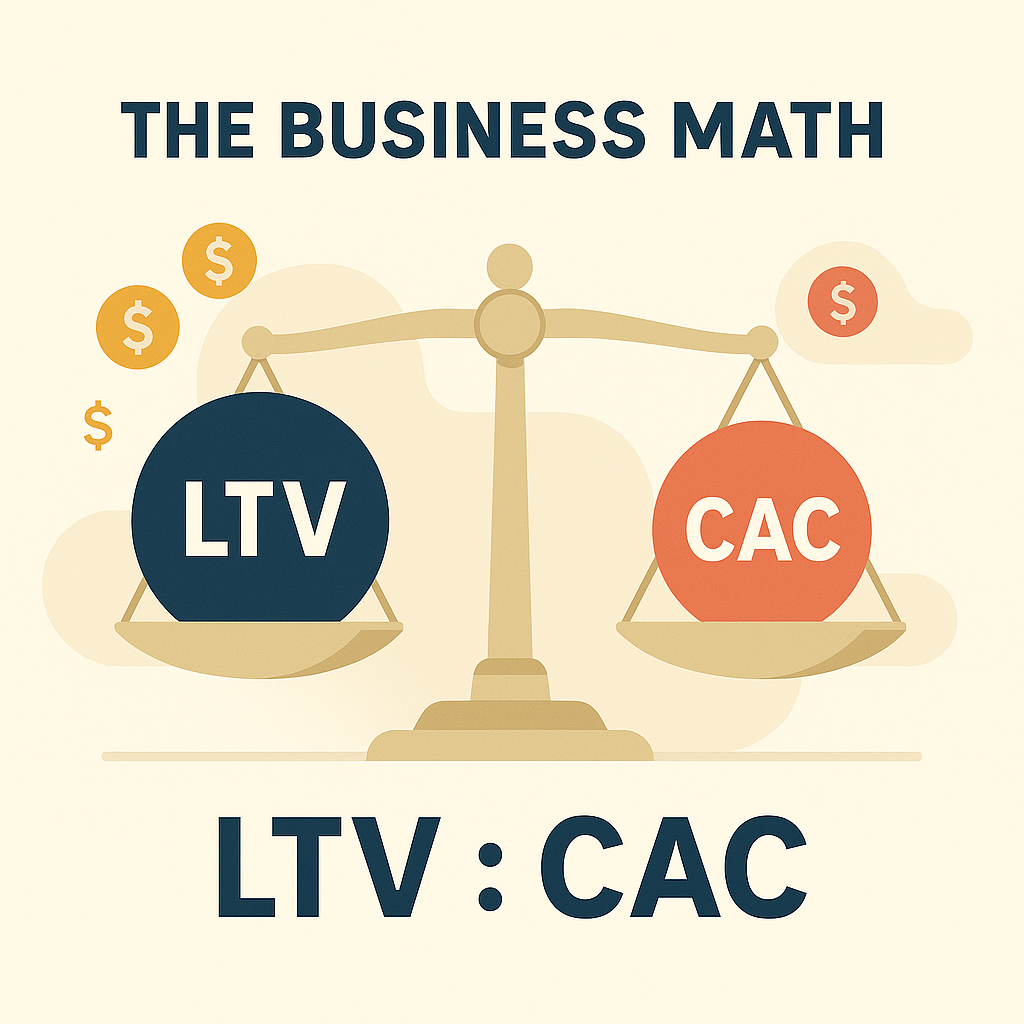
What’s behind this? Execs in the Know suggests cost cutting, bad customer service bots and lack of focus on customer satisfaction. One fundamental business ratio is Lifetime Value of Customer (LTV) and Customer Acquisition Costs (CAC). Leaving aside operating costs and understanding there are variations by industry… For the LTV:CAC ratio, at 1:1 you’re breaking even, 3:1 you’re likely healthy. Below 2:1 chances are you have thin margins and below 1:1 you’re losing money. LTV:CAC is a lagging indicator because churn and retention metrics might take awhile to show.

It’s one thing to have customers you erroneously think might be happy. It’s another to have some that can’t stand you and switching cost is the only thing barely keeping them with you.

[Read more…]

Filed Under: Marketing, Product Management

Agentic & AI Business Safety for Product Managers – Part 2

October 3, 2025 By Scott

Welcome back. If you’re new here, in Part 1, I went over some basic risk categories Product Managers need to be looking out when AI is an offering component.

This follow-up will cover the items in Part 2 of the outline. My motivation for writing these articles is due running into the challenges expressed in Part 1 head first and didn’t see a lot of great article coverage. For this next part, topics are already well-covered, but I’m going to run through them as introductions anyway for the sake of completing the outline and having a cohesive package for anyone new to the area.

As with so much we deal with, these areas are evolving fast. Many areas don’t have settled answers yet, and in the case of some fairness and ethical areas, might not even have the right questions yet.

[Read more…]

Filed Under: Product Management, Tech / Business / General

Agentic & AI Business Safety for Product Managers – Part 1

September 29, 2025 By Scott

TL;DR

Following are some things I’ve been coming across as I work, (and play), with some of our new tools. These days, whatever your level in Product, chances are you’re building or at least looking at something involving Agentic workflows or AI.

Given the increasing ease of use of new tools, you’re probably working directly with them. Hint: Even if you’re a CPO or VP, if you’re not getting your hands dirty, you’re similar to the CEOs as recently as the 1990s who were proud of the fact that they didn’t use email. Is that really the box where you’d like to constrain yourself? As with so many things, you don’t likely need to be an expert here. You just need to understand what the tools in your box can do and certainly some of the risks we face. Whether as Individual Contributor (IC), or senior manager, there’s risks and basic practices you need to have on your checklist that should be table stakes. Many of us now build with Low Code No Code or are VibeCoding our way to MVPs. Great. These tools are awesome for prototyping. For production though?

Watch out.

Stop here and just ponder that thought if you like. For details… read on. (Note that some of the upcoming examples are for any product person, whereas others are for more technical PMs or their developer partners. Regardless, they should give you a sense of what kinds of things you need to check off your list.)


[Read more…]

Filed Under: Product Management, Tech / Business / General, UI / UX

Saving Lives through Social Emotional Learning

September 10, 2025 By Scott

Lifesaving isn’t always about pulling someone from immediately dramatic danger. Sometimes it’s giving them the tools to rise from despair and build a life where they can thrive. That’s what I want to share with you today. These are some important things I’ve been working on recently as an advisor, and perhaps you can even help us.

Lifesaving and enhancement is why BuildingBlocs and The BrightPath Academy were created. They’re for anyone, but with special focus on several especially challenging situations. The organization is committed to delivering transformative education through emotional intelligence, with an ecosystem built on a foundation of books and workbooks, from financial literacy, and life-readiness through more challenging topics. It’s a holistic approach addressing the academic, social-emotional, and creative needs of learners across all life stages. While there’s a great deal of what many would consider to be obvious life skills, the content is designed for those who might not have typical exposure to such concepts through their home environment. Importantly, there is a focus on families that have experienced trauma, as well as special concerns of veterans, families who have been involved with the justice system, corrections officers, and more. There are specialized guides for veterans re-entering civilian life and for families navigating justice involvement, ensuring the curriculum isn’t just theory but directly relevant to the toughest real-world settings.

As well, there are emotional insight tools including red flag protocols: a trauma-informed, behavior recognition framework designed to help frontline professionals identify emotional escalation before it turns into disruption, shutdown, or violence. This framework is embedded into training guides and facilitator manuals, so staff in schools, ministries, or corrections don’t just hear the concept; they have a written playbook to use day-to-day.

These educational products have already been used by several organizations during development and are now ready for wider deployment.

My Perspective

Why am I involved with this? Why do I care?

My career has been building digital products. Days have the typical scope from strategy planning through design, information architecture, go to market and so on. The usual stuff of digital product craft. However, aside from career, I’ve been a long-time community volunteer in emergency services. Thousands of hours on ambulances or fire trucks. Thousands of rescue calls. It’s been a strange juxtaposition of experience at times. I’ve gone from treating a crash victim at 4 AM in freezing rain to logging into my corporate job a few hours later. Two very different worlds. But shaped how I see things, including both the robustness and fragility of life.

Through this lens I’ve seen how quickly lives can change based on adverse events, or from addiction. I’ve gone quickly from my day job of calm corporate to something else. OK, business life can get intense sometimes as well. But there’s a difference between concerns about deadlines and product launches vs. a tearful family member huddled in a corner saying, “Oh my God, what are we going to do now?” after a terrible family event.

BuildingBlocs is about a lot more than addiction, but I’m going to use that one area just to tell the story. To illustrate the value and the need for better programs than what we have now.

One Slip…

It can be challenging to understand how quickly an adverse change can occur. Again, this isn’t about addiction alone per se, but I’m going to use it as a primary example. (Consider seeing the Used to Survive book series, which reframes addiction as survival rather than identity, giving people tangible tools and strategies to move forward.)

Normally, I like to write about things that are really interesting to me, from AI to crypto to other digital things. But today, in this context, I’ll be perhaps overly candid with you.

I’ve never liked junkies. This may seem obvious. Who does?

After all, drug use is a choice, right? Plus, they lie. They’ll maybe physically attack you. They can be dirty. Even though I try hard to treat every patient as if they might be a friend or family member, there’s some you just have to be more careful of. Today, most EMS crews use some kind of electronic tablet for run reports. But some time ago, we used heavy aluminum clipboards. These were better for personal safety. Because they could be used to defend yourself. Patients struggling with addiction could be unpredictable, even violent. Here’s the thing though, these moments taught me that beneath my frustration was something deeper; fear of how thin the line is between them and me.

Because there’s something beyond just a dismissive dislike that holds more truth.

I think the real reason I don’t like drug users is they scare me because I realize how easy it is to end up that way… How easily that could be me or someone I care for. Which is why I have to treat everyone as best I can. It’s why if I find myself on some call where someone is just being a nightmare, I have to dig deeper for some empathy if I have to. Because here’s the reality… The difference between me and them is practically nothing. It’s a small accident of circumstance. Or as little as one really bad choice.

By the way, this is likely just as true for you as well.

Ever Come Close to It?

How people get to such dark places is not always what you think. It’s not just a progression of gateway drugs.

Every year, millions of Americans, around 8.6 million, report misusing prescription opioids, and over 5 million meet the criteria for prescription use disorder. When it comes to military veterans, the fallout is especially serious: overdose mortality among veterans increased by more than 50% between 2010 and 2019, and those with a nonfatal opioid overdose face mortality rates up to 26 times higher than the general population. This makes the journey from legitimate pain relief to addiction tragically easy. This has become a better-known story after the publicity around Oxycontin overprescription.

Have you ever used hard drugs? I have. Not recreationally. But I play a lot of sports and have been hurt badly enough to end up needing procedures that resulted in somewhat heavy prescriptions.

After sports injuries and surgeries, (including some reconstructive leg surgery just this past year), I’ve been prescribed opioids. I’ve felt how powerful and how dangerously appealing they can be. With sensible doctors and support, I was careful to get off them quickly. Not everyone is so lucky. That reality is why BuildingBlocs created both direct-use books for families and facilitator materials for professionals; resources that explain the science of tolerance, dependence, and relapse in ways people can actually use. The typical stages of progression are tolerance → dependence → addiction. That’s the cycle to interrupt.

From this personal experience perspective, I look at the risks for kids and others today. It’s so much higher now that even just a couple of decades ago. The drugs available, from synthetics to the raw power of them present higher risk. Consider Fentanyl alone. One pill to kill. Or turn someone into something else thanks to brain injury from hypoxia, neurological and cognitive defects, cardiac and organ damage, physical disability, and yes, of course, psychiatric and dependence risks. That’s just one example of potential impact from one drug.

Let’s Check our Biases for a Moment

Success can blind us. Confirmation bias makes us see only what supports our beliefs. Survivor bias makes us forget those who didn’t make it. Together, they trick us into thinking others had the same chances we did.

This makes sense. It’s how we deal with our world. We’re all entitled to confidence, enjoyable lives, joy, and so on. Who wants to think about all the trouble and pain in the world every moment? That wouldn’t be healthy. Bad enough our 24/7 news cycle has the “if it bleeds it leads” perspective and is more about inciting and inflaming, rather than informing. Still, at the same time, on occasion we should realize these issues exist. We can go on about our lives and be grateful for them, but also consider our judgment when things don’t work so well for others.

Is our dismissal of some others struggling with these issues because we hate them? Unlikely. Do we fear what some of them might do in society? Of course. But is there something else as well? Is there fear that the line between us and them is so thin? Because it is. Studies on addiction stigma show people often distance themselves from those with substance use disorders not just out of fear of crime or behavior, but because it threatens their own sense of control and safety. Social psychologists describe this as “othering,” pushing stigmatized groups away, to reassure ourselves that we are different. Research on mental health stigma (e.g., Link & Phelan’s work) finds people often fear the “contagion of similarity,” that what happened to someone else could happen to them under different circumstances. That’s part of why BuildingBlocs created not just facilitator training but also a suite of books for parents, teens, veterans, and justice-impacted families, meeting readers where they are with relatable stories and actionable exercises. Addiction is framed as a “moral failing” in some narratives, but neuroscience shows it’s a brain disease of reward circuitry. That makes the line between casual use and addiction disturbingly thin, which fuels unease. Erving Goffman’s work on stigma points out that reactions often reflect not hatred, but anxiety about our own vulnerability.

I am not suggesting to anyone to wallow in despair at the state of the world. For all of our challenges, if you take a long view of human history, we are arguably doing better off than any humans throughout history. Most of us live full lives and die of so-called “natural causes.” Often, other animals and even plants end their lives not through old age, but by being outright eaten by something or another! Do you know why there’s so much cancer around? Part of it is that we’re living longer than we used to so it shows up. The point is, we’re collectively doing well as a species over time. For all the travails of the world, things are great and we can – I believe – be fairly optimistic. But sometimes some of us have extra challenges. And maybe need some special tools to manage them. And optimism is exactly what these programs are built to provide. Step-by-step, book and program supported systems that move people from despair to practical hope.

The Pitch

BuildingBlocs and The BrightPath Academy have been several years in development and the programs are ready to help those in need. These programs are paired with their published books. Titles like Budget Like a Boss for financial literacy, Family Reset for intergenerational healing, and the Used to Survive series for addiction recovery. Each one is designed to connect directly with the courses and facilitator guides, so people can engage individually or in group settings.

If you are a school, a facility dealing with at-risk populations, a ministry, or similar, please spend some time checking out the available programs. Or perhaps you may personally know a family or individual that’s struggling. There are programs for direct help for those in need, as well as training materials for facilitators.

Whether through the published book series or online courses, BuildingBlocs makes the tools accessible. If you know an organization or even just one family that could benefit, point them here.

Thank you,
Scott Germaise
(Advisory Board Member)

Filed Under: Tech / Business / General

  • 1
  • 2
  • 3
  • …
  • 13
  • Next Page »

Recent Posts

  • Your Outage Risk Feels Less Black Swanny
  • Product Lessons from DeFi’s Rise
  • Cryptocurrency and Fiat: Independence, Interdependence
  • How Does Fiat Become Cryptocurrency?
  • The Composable Everything Future

Categories

  • Analytics
  • Book Review
  • Crypto
  • Marketing
  • Product Management
  • Tech / Business / General
  • UI / UX
  • Uncategorized

Location

We're located in Stamford, CT, "The City that Works." Most of our in person engagement Clients are located in the metro NYC area in either New York City, Westchester or Fairfield Counties, as well as Los Angeles and San Francisco. We do off site work for a variety of Clients as well.

Have a Project?

If you have a project you would like to discuss, just get in touch via our Contact Form.

Connect

As a small consultancy, we spend more time with our Clients' social media than our own. If you would like to keep up with us the rare times we have something important enough to say via social media, feel free to follow our accounts.
  • Facebook
  • LinkedIn
  • Twitter

Copyright © 2025 · TetraMesa, LLC · All Rights Reserved